Travel Skincare Essentials: What to Pack
The instinct when packing skincare is to bring everything, decanted into a dozen tiny bottles, so you do not miss a single step. Then you spend the trip with a bulging toiletry bag and skin that breaks out anyway. The truth about travel skincare essentials is smaller and more useful: three products do almost all the work, and the thing most packing lists ignore is not a product at all.
Travel is genuinely hard on skin, which is the case for simplifying rather than transplanting your whole routine. Here is the minimal kit that actually holds up, the rules that govern getting it through security, and the hygiene detail that matters more the moment you check into a hotel.
The three essentials
The core travel kit is a gentle cleanser, a moisturizer, and a broad-spectrum sunscreen of SPF 30 or higher. That is the foundation, and for a short trip it is close to complete. Add a serum only if it is already a working part of your routine, not because there is space in the bag.
Each earns its place. A gentle, non-stripping cleanser handles the sweat, dirt, and pollution that travel piles on, without leaving skin tight. It is also the product you are most likely to reach for at odd hours in unfamiliar places, so it should be forgiving and familiar rather than something new you are trialing mid-trip. A moisturizer defends against the dehydration that travel causes, especially in dry cabin air. And sunscreen is the one dermatologists call non-negotiable: the AAD recommends broad-spectrum SPF 30 or higher, and travel often means more sun than usual, in a car, on a plane, or outdoors somewhere new. Beyond those three, the useful additions are multi-taskers that collapse steps: a moisturizer with built-in SPF, a tinted balm that doubles for lips and cheeks. The goal is fewer items doing more, not more items doing less.
| Pack | Skip |
|---|---|
| Gentle cleanser (TSA-sized) | Full-size anything |
| Moisturizer, ideally with SPF | Multiple new serums to test |
| Broad-spectrum SPF 30+ | Heavy tools and devices |
| A clean drying surface for your face | Reliance on hotel towels |
| Solids: balm, sunscreen stick | Glass bottles that leak or break |
The last step matters
Calm starts with a clean surface.
Shop face towels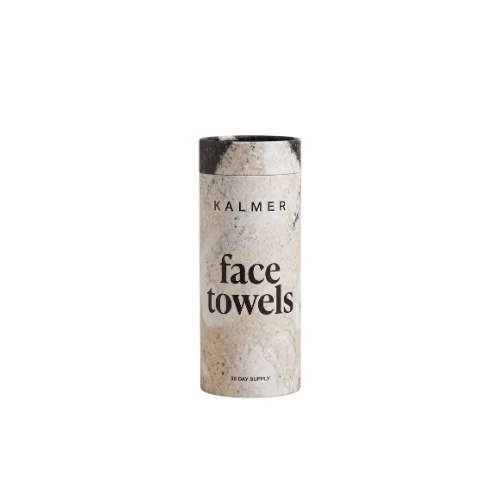
"TSA limits carry-on liquids to containers of 3.4 ounces (100 mL) or less, all fitting within one quart-sized clear bag."Source: Transportation Security Administration
Getting it through security
Pack liquids in TSA-sized containers and keep the whole kit in your carry-on. The TSA rule is simple: carry-on liquids, gels, and creams must be in containers of 3.4 ounces or less, and they all have to fit in a single quart-sized clear bag. Decant your existing products into refillable travel bottles rather than buying new travel-size formulas your skin has never met, which avoids a bad reaction far from home.
The decanting point is worth dwelling on, because it is where people go wrong. A trip is the worst time to introduce a brand-new formula, since a reaction leaves you dealing with irritated skin far from your usual products and your dermatologist. Decanting what you already use into small bottles keeps your skin on known ingredients while still meeting the size limits. Two moves save space and hassle. First, lean on solids where you can: a cleansing balm, a moisturizer bar, or a sunscreen stick does not count against the liquids limit, which frees up room in the quart bag. Second, keep your skincare in your carry-on, not your checked luggage, so a delayed or lost bag does not also cost you your routine, including any prescription products you cannot easily replace. If you would rather not decant at all, a pre-made travel set of minis works, as long as the products suit your skin.
Why travel stresses your skin
Travel disrupts skin through dry air, changing climates, and extra sun, which is why simplifying helps. Airplane cabins run at very low humidity, drawing moisture out of your skin and leaving it tight and dull by the time you land. Then you arrive somewhere with a different climate, more sun, unfamiliar water, and a disrupted routine, and even balanced skin can respond with breakouts, dryness, or sensitivity.
The last step matters
Calm starts with a clean surface.
Shop face towelsThere is a temptation to counter travel stress by adding a rescue product for every possible problem: a mask for dullness, an extra serum for breakouts, a richer cream for dryness. It usually backfires, because more products on already-stressed skin is more chances to react. The dermatologist-approved response is not more products, it is steadier basics. Keep cleansing gentle, keep skin hydrated, and keep it protected from the sun. Resist the urge to introduce several new formulas at once on a trip, because if your skin reacts, you will not know which one to blame, and you are a long way from your usual shelf. A simple, familiar routine travels better than an elaborate experimental one, the same principle behind a good basic skincare routine at home. If a disposable option appeals for the trip, our take on disposable face towels covers what they do and do not do, minus the marketing.
Skip the hotel towel
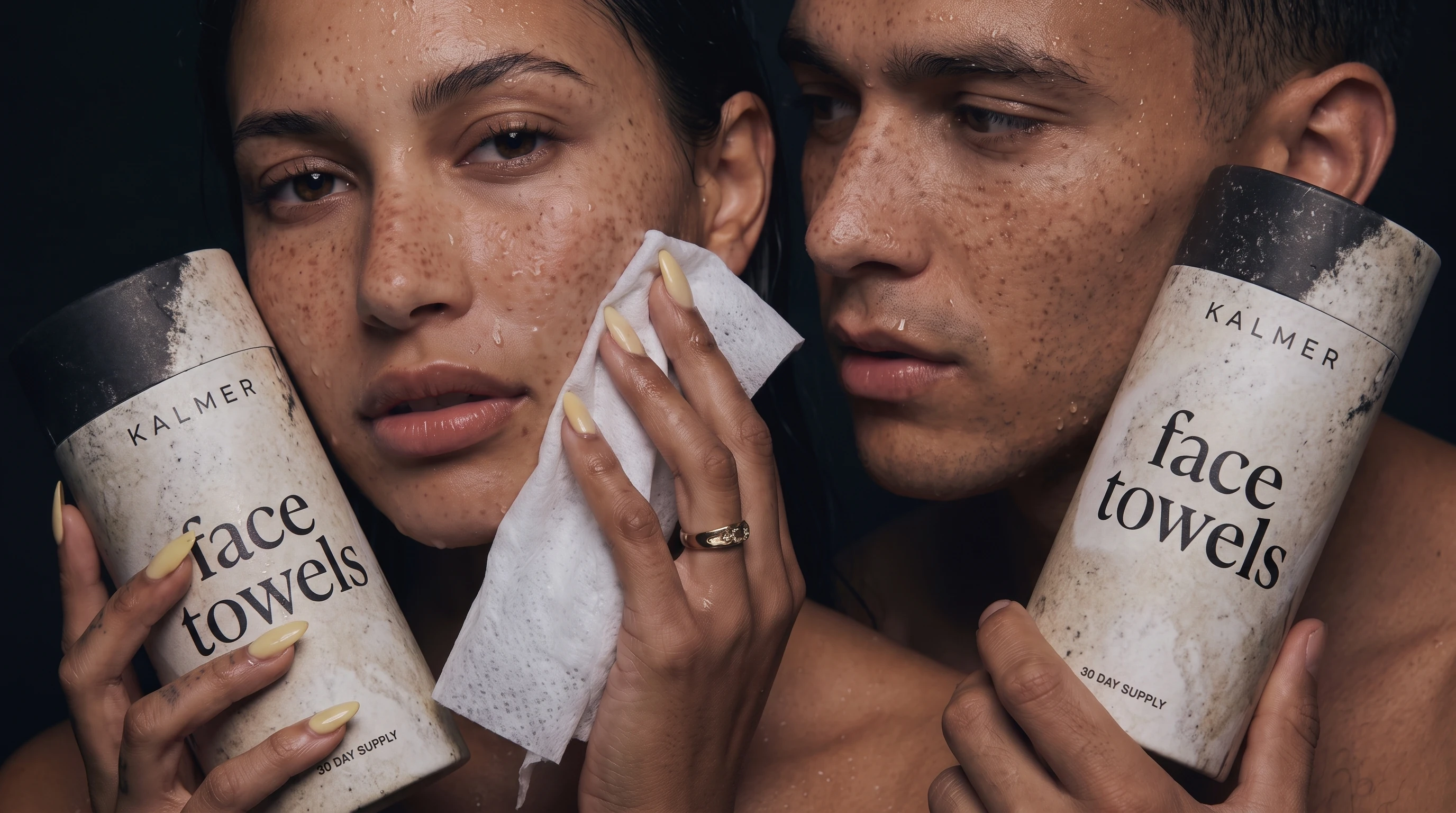
Hotel towels are shared and their history is unknown. KALMER travel packs give you a clean, single-use face towel for each day of the trip, so the surface that meets your just-washed face is always yours and always clean.
Shop KALMERThe detail most lists skip: hygiene
The thing missing from most travel skincare lists is not a product, it is the surfaces that touch your skin. Hotel towels are laundered, but they are shared, you cannot know their full history, and any towel that sits damp is a place bacteria grow. For your body that is usually fine. For your freshly cleansed face, it is worth a second thought.
Dermatologists make a related point about travel hygiene in general: you cannot know whether the person who used your hotel room or stood ahead of you in the security line had a skin or fungal infection, which is why they advise not going barefoot in hotel bathrooms and being mindful of shared surfaces. The same caution applies to what you press against your face after washing. In a six-month study of towels in daily use, biofilm formed within the fabric over time, and a hotel towel is one whose laundering and drying you did not control.
"Biofilm formed within towel fibers over 6 months of daily use, and the microbes on used towels differed from those on skin."Source: Nagai et al., Scientific Reports, 2023
The last step matters
Calm starts with a clean surface.
Shop face towelsThis is where a single-use face towel earns its spot in a travel kit specifically. It is light, it does not count as a liquid, and it means the surface meeting your just-washed face is clean and yours rather than the hotel's. KALMER travel packs are built for exactly this: a clean, single-use towel for each day, so the drying step is one thing you never have to wonder about on the road. Not because a towel transforms your skin, but because it removes the one variable a strange bathroom introduces. If you want the fuller case, we covered how often to wash your face towel and why moisture, not the calendar, is the real issue.
A quick word on the case for single-use specifically while traveling, since it is stronger on the road than at home. At home, you control your own towel: you know when it was last washed and you can keep it dry. In a hotel, you control none of that. The towel was laundered by someone else, to a standard you cannot see, and it may have hung damp in a windowless bathroom before you arrived. That loss of control is the whole argument. A single-use surface hands it back to you for the one part of the routine where freshly cleansed skin is most exposed, at close to no weight or space cost in the bag.
When to see a dermatologist
Travel skin problems are usually temporary, but some are not. See a board-certified dermatologist if you come home with a rash, bite, or skin or nail infection that does not settle, if you develop persistent irritation after a trip, or if a reaction spreads or worsens. Tell them where you traveled, for how long, and what you did, since that context helps. Most travel skin issues fade once you are back on your normal routine, but the ones that linger are worth a professional look rather than waiting them out.
The people who come back from trips with happy skin are rarely the ones who packed the most. They are the ones who kept it simple, protected against the sun, stayed hydrated, and did not experiment with a suitcase full of new products a thousand miles from home. Pack light, stay gentle, and let the basics do their job. For that specific hygiene gap, KALMER travel packs give you a clean, single-use face towel for each day of the trip, so the surface meeting your skin is always yours.
Frequently asked questions
What skincare do I actually need for travel?
+
A gentle cleanser, a moisturizer, and a broad-spectrum sunscreen with SPF 30 or higher cover the essentials. Add a serum only if it is part of your regular routine. Multi-taskers like a moisturizer with SPF save space, and everything should be TSA-sized and packed in your carry-on.
What are the TSA rules for skincare?
+
Carry-on liquids, gels, and creams must be in containers of 3.4 ounces or 100 milliliters or less, all fitting in one quart-sized clear bag. Solid products like balms and sunscreen sticks do not count as liquids, which is a useful way to save space.
Why does my skin break out or dry out when I travel?
+
Airplane cabins have very low humidity, which dehydrates skin, and new climates, sun exposure, sweat, and disrupted routines all add stress. That is why dermatologists suggest simplifying rather than piling on products: keep skin clean, hydrated, and protected, and avoid introducing lots of new formulas at once.
Are hotel towels clean enough for your face?
+
Hotel towels are laundered, but they are shared and you cannot know their full history, and any towel that sits damp collects bacteria. For your face specifically, bringing your own clean surface removes the guesswork, which is one reason single-use face towels are popular for travel.