What does dermatologist-tested actually mean?
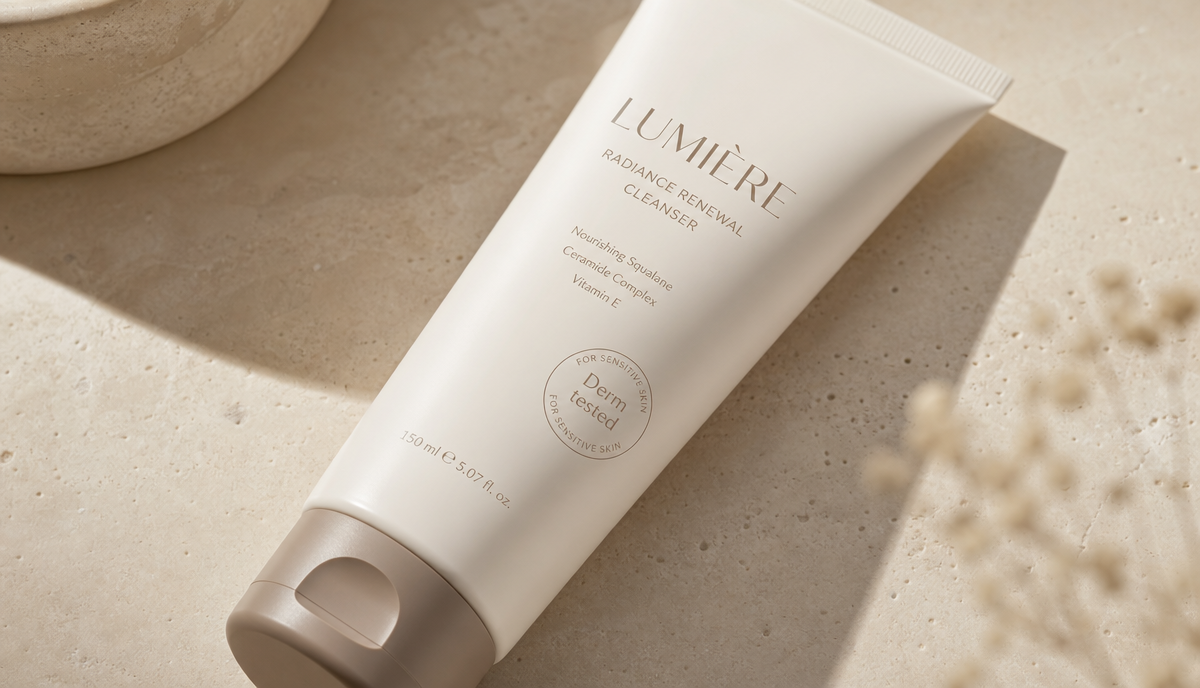
It is on half the products in your bathroom, printed in a font that looks like a seal of approval: dermatologist-tested. It sounds official, medical, and reassuring, which is exactly why it works as marketing and exactly why it is worth understanding. What does dermatologist-tested actually mean? Much less than it implies, and knowing the gap between the impression and the reality changes how you read every label.
This is not a reason to distrust everything. It is a reason to put the phrase in its proper place, which is closer to advertising than to evidence, and to know what to check instead.
What dermatologist-tested actually means
Dermatologist-tested means a dermatologist was involved in testing the product at some point. That is the whole claim. It does not say what was tested, how it was tested, on how many people, for how long, or what result the product had to achieve to earn the phrase. A product could be tested by one dermatologist on a handful of people and still carry the label whether the results were impressive or unremarkable.
The reason it can be so vague is that it is not a regulated term. In the US, the FDA does not define or approve claims like dermatologist-tested, and cosmetic claims in general are not pre-approved before a product goes on sale. Companies are responsible for not being misleading, but there is no official standard behind the words, no test the phrase certifies, and no results it promises. It is a reassurance-shaped phrase that survives because it makes buyers feel safer without committing the company to anything specific.
What it does not mean
The label makes no promise about results, which is where most people misread it. Dermatologist-tested does not mean a dermatologist recommends the product, that it passed any particular safety or efficacy test, that it will not irritate your skin, or that it is suitable for sensitive skin. It says testing happened. It says nothing about what the testing found.
This is not a technicality. A product can be dermatologist-tested and still contain fragrance, alcohol, or other common irritants, because the phrase does not certify the absence of anything. It is entirely possible for a product to be dermatologist-tested and to break out the very sensitive skin it seems to be reassuring. The label and the outcome are simply not connected in the way the packaging implies.
"Claims like dermatologist-tested and hypoallergenic are not defined or regulated by the FDA, which means there is no official standard a product must meet to use them."Source: U.S. Food and Drug Administration, cosmetics labeling claims
The whole family of soft claims
Dermatologist-tested is one of several reassuring but unregulated terms, and they all work the same way. Once you see the pattern, the front of a package reads very differently. Each of these sounds like a standard and is actually a soft, largely unverifiable claim.
| Claim | What people assume | What it actually guarantees |
|---|---|---|
| Dermatologist-tested | A derm approved it | A derm helped test it, results unstated |
| Dermatologist-recommended | Derms endorse it | Unregulated, can rest on one opinion or a survey |
| Hypoallergenic | Won't cause reactions | No federal standard; company decides |
| Clinically-tested | Proven in a trial | Testing happened, of unspecified rigor |
| Non-comedogenic | Won't clog pores | No standardized test required |
Hypoallergenic is the clearest example: the FDA has stated plainly that there are no federal standards or definitions governing the term, so it means whatever the manufacturer wants it to mean. The same logic applies across the group. This is the same reason fragrance-free and unscented are so often confused, since label language is designed to reassure faster than it informs.
Claims you can actually check
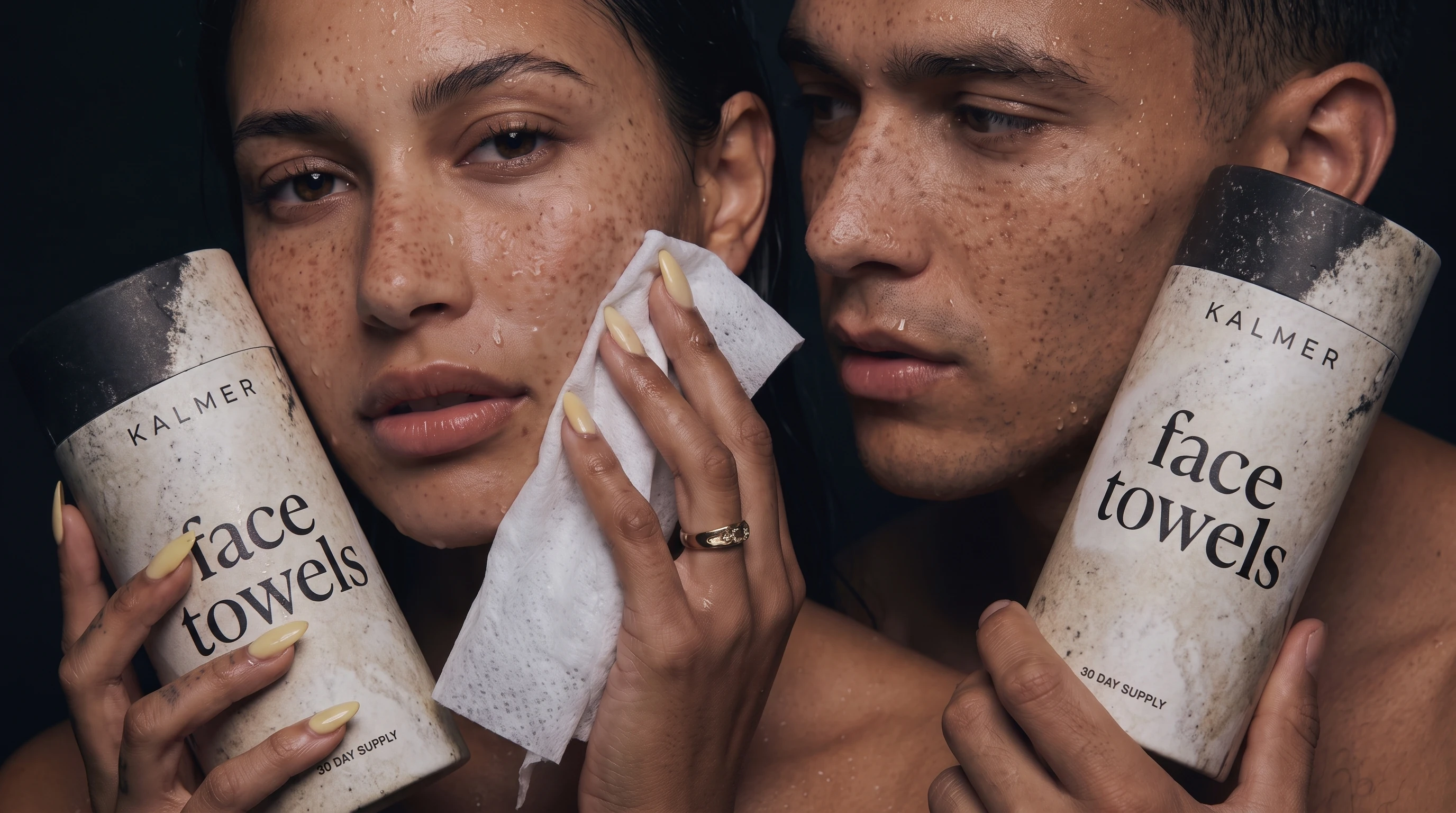
The honest version of a label is a short one you can verify. KALMER is a single-use cotton face towel: fragrance-free and dermatologist-tested, with nothing on the label you cannot confirm by reading the ingredients, which is a very short list.
Shop KALMERWho tests it, and how little that specifies
It is worth picturing what "tested" can actually cover, because the range is enormous and the label flattens all of it into two reassuring words. On one end, a company might run a careful study with a board-certified dermatologist overseeing a reasonable number of participants over a meaningful period. On the other, a single dermatologist might glance at a small patch test on a handful of people for a day. Both can legally produce the phrase "dermatologist-tested," and nothing on the package tells you which one you are looking at. There is also no requirement that the test showed a good result, only that testing happened. Once you see that the phrase spans everything from rigorous to token, you stop reading it as a grade and start reading it as what it is: a note that some testing occurred, details unspecified.
What to check instead
Read the ingredient list and patch test, because those give you real information the front of the pack cannot. This is the practical takeaway, and it is more empowering than it sounds: you do not have to decode marketing if you go straight to the facts.
The ingredient list is regulated and must be accurate, so it tells you what is actually in the product, unlike the claims on the front. For sensitive skin, scan it for fragrance and known irritants rather than trusting a soothing-sounding phrase. Prefer specific, checkable labels over vague ones: fragrance-free is more useful than dermatologist-tested because you can verify it against the ingredients, even though, as covered elsewhere, even that term has fine print. And patch test anything new on a discreet area for a few days before committing it to your face. A study of best-selling moisturizers found that most contained at least one common allergen despite reassuring marketing, which is exactly why your own skin, not the packaging, is the test that counts. If your skin is reactive, build from a minimal, checkable routine rather than a shelf of trust-me claims.
None of this means dermatologist-tested is a red flag or a lie. A brand can use it honestly, and many do. The point is narrower: it is a weak signal, not a strong one, so it should never be the reason you buy something or the evidence you rely on for safety. Treat it as a mild plus at most, and let the ingredient list and your own patch test do the real deciding. A claim you can verify is worth ten you cannot.
Why this matters for your skin
Reading labels accurately saves you money and irritation. When you understand that dermatologist-tested is a soft claim, you stop paying a premium for the reassurance and start paying attention to what is actually in the bottle. You also stop blaming yourself when a dermatologist-tested product irritates you, because you understand the label never promised it would not. That shift, from trusting the front of the pack to checking the back, is one of the most useful habits in all of skincare, and it applies to every product you will ever buy. The best products tend to make fewer claims, not more, and let a clean ingredient list do the talking.
For our part, KALMER uses dermatologist-tested and fragrance-free on a deliberately short ingredient list, so the claims are ones you can confirm by reading it rather than take on faith. That is the standard worth holding every product to, ours included, and the same reading habit applies to a sensitive-skin routine where every added product is a new set of claims to check.
Key takeaways
Dermatologist-tested means a dermatologist helped test the product at some point, and nothing more: it is unregulated, sets no standard, and promises no result. It does not mean recommended, proven, or non-irritating, and a dermatologist-tested product can still contain irritants. It belongs to a family of soft, unverifiable claims alongside hypoallergenic, clinically-tested, and non-comedogenic. The reliable move is to ignore the reassuring front-of-pack language, read the regulated ingredient list, prefer specific checkable claims, and patch test anything new.
Frequently asked questions
What does dermatologist-tested mean?
+
It means a dermatologist was involved in testing the product at some stage, and nothing more specific than that. The term is not defined or regulated by the FDA, so it does not specify what was tested, how, on how many people, or what result was required. It is a reassurance-shaped phrase, not a standard.
Is dermatologist-tested the same as dermatologist-recommended?
+
No. Dermatologist-tested means a dermatologist took part in testing. Dermatologist-recommended implies a dermatologist endorses the product, which is a different and stronger claim, though it too is unregulated and can rest on a single professional's opinion or a company-run survey. Neither guarantees the product suits your skin.
Does dermatologist-tested mean a product won't irritate my skin?
+
No. The label makes no promise about results, so it does not mean the product is non-irritating, safe for sensitive skin, or free of common allergens. A product can be dermatologist-tested and still contain fragrance or other irritants. Your skin is the only test that matters for you, which is why patch testing is worth more than the claim.
What should I look for instead of dermatologist-tested?
+
Read the actual ingredient list rather than the front-of-pack claims, look for specific meaningful labels like fragrance-free for sensitive skin, and patch test anything new on a discreet area for a few days. Specific, checkable information beats a vague reassurance term every time.
Sources
- U.S. Food and Drug Administration, Cosmetics labeling claims
- U.S. Food and Drug Administration, "Hypoallergenic" cosmetics
- Xu S, Kwa M, Lohman ME, Evers-Meltzer R, Silverberg JI (2017). Consumer Preferences, Product Characteristics, and Potentially Allergenic Ingredients in Best-selling Moisturizers. JAMA Dermatology 153(11):1099-1105.