How to Wash Your Face the Right Way

Almost everyone knows they should wash their face. Far fewer know how, in the specific, physical sense: what temperature, how long, with what, and how to finish. Washing your face is not complicated, but a handful of small technique errors, repeated twice a day, are enough to leave skin tight, irritated, or breaking out. How to wash your face the right way comes down to being gentle in four places most people rush.
This is about method, not schedule. If you are wondering how often to wash, we covered how often you should wash your face separately. Here we are strictly on technique: the actual thirty to sixty seconds at the sink, and the step after it that nobody counts as part of washing.
How to wash your face, step by step
The core method is five moves: clean hands, lukewarm water, a gentle cleanser worked in with fingertips, a thorough rinse, and a gentle pat dry. That is the whole technique, and each step has a reason.
Start with clean hands, because you are about to spread whatever is on them across your face. Wet your skin with lukewarm water. Apply a small amount of a gentle, non-abrasive cleanser and massage it in with your fingertips using light circular motions for around thirty to sixty seconds, which is long enough to actually lift oil and debris without turning into a scrub. Rinse thoroughly with lukewarm water, since leftover cleanser residue can irritate and dry the skin. Then pat, do not rub, with a clean towel, and apply moisturizer while your skin is still slightly damp so there is water to seal in.
"The AAD advises applying cleanser with your fingertips, because using a washcloth, mesh sponge, or other tool can irritate the skin."Source: American Academy of Dermatology, Face washing 101
The last step matters
Calm starts with a clean surface.
Shop face towels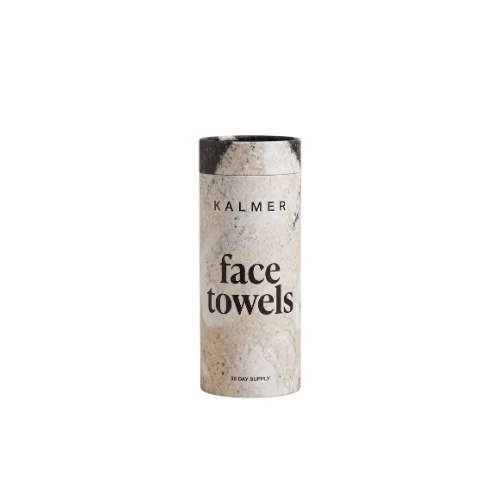
Notice what is not on the list: scrubbing, tools, hot water, and squeaky-clean tightness. None of those are part of good technique, and three of them are the most common ways people get it wrong.
Water temperature: lukewarm, not hot
Use lukewarm water, because hot water strips the skin and cold water does not clean well. This is the single easiest fix in the whole routine and one of the most overlooked, because hot water feels thorough. It is thorough in the wrong way: it removes the lipids that hold your skin barrier together, the same way a harsh cleanser does.
The barrier here is the stratum corneum, your outermost layer, built from cells packed in a matrix of oils. Strip those oils and the barrier seals less well, so skin loses water and lets irritants in more easily, which shows up as tightness, flaking, and new sensitivity. Done repeatedly, that is one of the most common routes to a damaged skin barrier, and it starts with something as ordinary as water that is too hot. Lukewarm water cleanses effectively without that cost. If your face feels tight and squeaky after washing, the water was probably too hot, the cleanser too harsh, or both. That squeak is not the feeling of clean, it is the feeling of a stripped barrier.
Fingertips, not tools
Wash with your fingertips, not a washcloth, brush, or sponge. Dermatologists are consistent on this for the face: the American Academy of Dermatology specifically advises against washcloths, mesh sponges, and other tools because the added friction irritates skin, and it repeats the point in its guidance for acne-prone skin, where scrubbing can make breakouts worse.
The last step matters
Calm starts with a clean surface.
Shop face towelsThe appeal of a tool is the feeling of a deeper clean, but that feeling is mostly friction, and friction is the thing to avoid. Your fingertips are soft, gentle, and precise enough to work cleanser into the skin without abrading it. If you like the light exfoliation a washcloth provides, that is a separate, occasional step rather than your daily method, with its own trade-offs. For the everyday wash, fingertips win.
| Common mistake | What to do instead |
|---|---|
| Hot water | Lukewarm water |
| Scrubbing with a brush or cloth | Light circular motions with fingertips |
| Washing until skin squeaks | Stop while skin still feels comfortable |
| Rubbing dry with a towel | Patting gently with a clean towel |
| Skipping moisturizer because skin feels oily | Moisturize on slightly damp skin |
The last step of the wash
The technique ends where most people rush: drying. KALMER is a single-use face towel, so the final touch of your wash is a clean, dry surface every time, not a damp cloth off the hook.
Shop KALMERDo you need to double cleanse?
Sometimes, not always. Double cleansing means using an oil-based cleanser first to break down makeup and sunscreen, then a gentle water-based cleanser to clean the skin underneath. It is genuinely useful at the end of a day spent in heavy makeup, long-wear sunscreen, or city grime, where a single wash can leave residue behind.
It is not a daily requirement, and for many people it is overkill. On a bare face, in the morning, or on dry and sensitive skin, double cleansing every time can strip more than it helps, leaving you back at the tight, over-cleansed feeling this whole method is trying to avoid. A good rule: double cleanse when you are wearing something that needs dissolving, single cleanse the rest of the time. Match the effort to what is actually on your face, rather than adding a step because a routine online told you to.
The last step matters
Calm starts with a clean surface.
Shop face towelsThe step everyone rushes: drying
Drying is part of the technique, not an afterthought, and it is where a careful wash quietly comes undone. After rinsing, pat your face gently with a clean towel rather than dragging it across your skin. Right after cleansing, your skin is at its most vulnerable, and rubbing adds friction to exactly the wrong moment.
Two details make the drying step work. First, pat and lift rather than wipe, which minimizes friction. Second, leave your skin slightly damp and apply moisturizer immediately, so there is still surface water to seal in rather than sealing a bone-dry face. A single-use towel like KALMER makes the clean part automatic, since there is no reused cloth to keep track of. And the towel itself matters more than people think. The AAD says to pat dry with a clean towel, and the towel most people reach for has been hanging in a humid bathroom for days, quietly collecting bacteria. A careful wash finished on a not-clean towel gives back part of what the wash removed.
The order of your whole routine follows from the same logic as the wash itself: thinnest to thickest. After cleansing, apply water-based products before heavier ones, and finish with sunscreen in the morning as the outermost layer. The wash is step one, and getting it gentle sets up everything that follows. If the first step strips your barrier, no serum later in the routine is going to repair the damage faster than the next wash undoes it.
One habit ties the whole method together: match your effort to what your skin needs, not to how thorough you want to feel. Skincare rewards restraint in a way that is genuinely counterintuitive, because the instinct that harder, hotter, and more equals better is exactly backwards at the sink. The people with the calmest skin are usually not the ones doing the most to it. They are the ones who found the gentlest version of each step and then simply repeated it. Washing your face is the first and most frequent of those steps, which is why getting it gentle pays off twice a day, every day.
When to see a dermatologist
The last step matters
Calm starts with a clean surface.
Shop face towelsTechnique is a small lever, so know when the issue is bigger. See a board-certified dermatologist if your skin stings, flakes, or stays red no matter how gently you wash, if you have persistent breakouts despite a careful routine, or if you suspect a condition like rosacea, eczema, or contact dermatitis. Sometimes the problem is not how you wash but what you are washing with, or something underneath that a change of technique will not fix. A dermatologist can tell you which, and that is worth more than another cleanser.
A last practical point on cleanser choice, since technique and product work together. A good everyday cleanser is gentle, non-abrasive, and, for reactive skin, fragrance-free and alcohol-free. It should leave your skin feeling clean and comfortable, not tight. If your current cleanser leaves you tight no matter how careful your technique, the cleanser is the problem, not your method, and switching to a gentler one will do more than any change in how you use it. Foaming gels suit oilier skin, cream or lotion cleansers suit drier skin, and both can be gentle if the formula is right.
How to wash your face the right way is mostly about being gentle in four places: use lukewarm water not hot, apply a gentle cleanser with your fingertips rather than a tool, stop before your skin feels tight and squeaky, and pat dry with a clean towel instead of rubbing. None of it is complicated, and all of it comes down to resisting the instinct that harder equals cleaner. For the drying step specifically, KALMER is a single-use cotton towel: clean and dry every time, so the last touch of your wash is never the damp cloth on the hook.
Frequently asked questions
How do you properly wash your face?
+
Wet your face with lukewarm water, apply a gentle cleanser with your fingertips using light circular motions for around 30 to 60 seconds, rinse thoroughly, and gently pat dry with a clean towel. Use your fingertips rather than a washcloth or brush, and follow with moisturizer while your skin is still slightly damp.
Should you wash your face with hot or cold water?
+
Lukewarm. Hot water strips the natural oils that keep your skin barrier intact, and very cold water does not clean effectively. Lukewarm is the temperature that cleanses without stripping.
Do you need to double cleanse?
+
Only sometimes. Double cleansing, an oil-based cleanser followed by a gentle water-based one, is useful for removing heavy makeup or sunscreen at the end of the day. For a bare face or in the morning, a single gentle cleanse is enough, and double cleansing daily can over-strip sensitive skin.
Should you use your hands or a washcloth to wash your face?
+
For most people, and especially for sensitive or acne-prone skin, dermatologists favor clean fingertips over a washcloth. Fingertips add almost no friction, while a washcloth can over-exfoliate and irritate. A soft washcloth used gently and kept clean is fine for skin that tolerates it.
Sources
- American Academy of Dermatology, Face washing 101
- American Academy of Dermatology, Acne: tips for managing
- Cleveland Clinic, How Often Should You Wash Your Face? (Kathryn Anderson, MD)
- Del Rosso J, Zeichner J, Alexis A, et al. (2016). Understanding the epidermal barrier in healthy and compromised skin. Journal of Clinical and Aesthetic Dermatology, 9(4 Suppl 1):S2-S8.