Damaged skin barrier: signs, causes, and repair
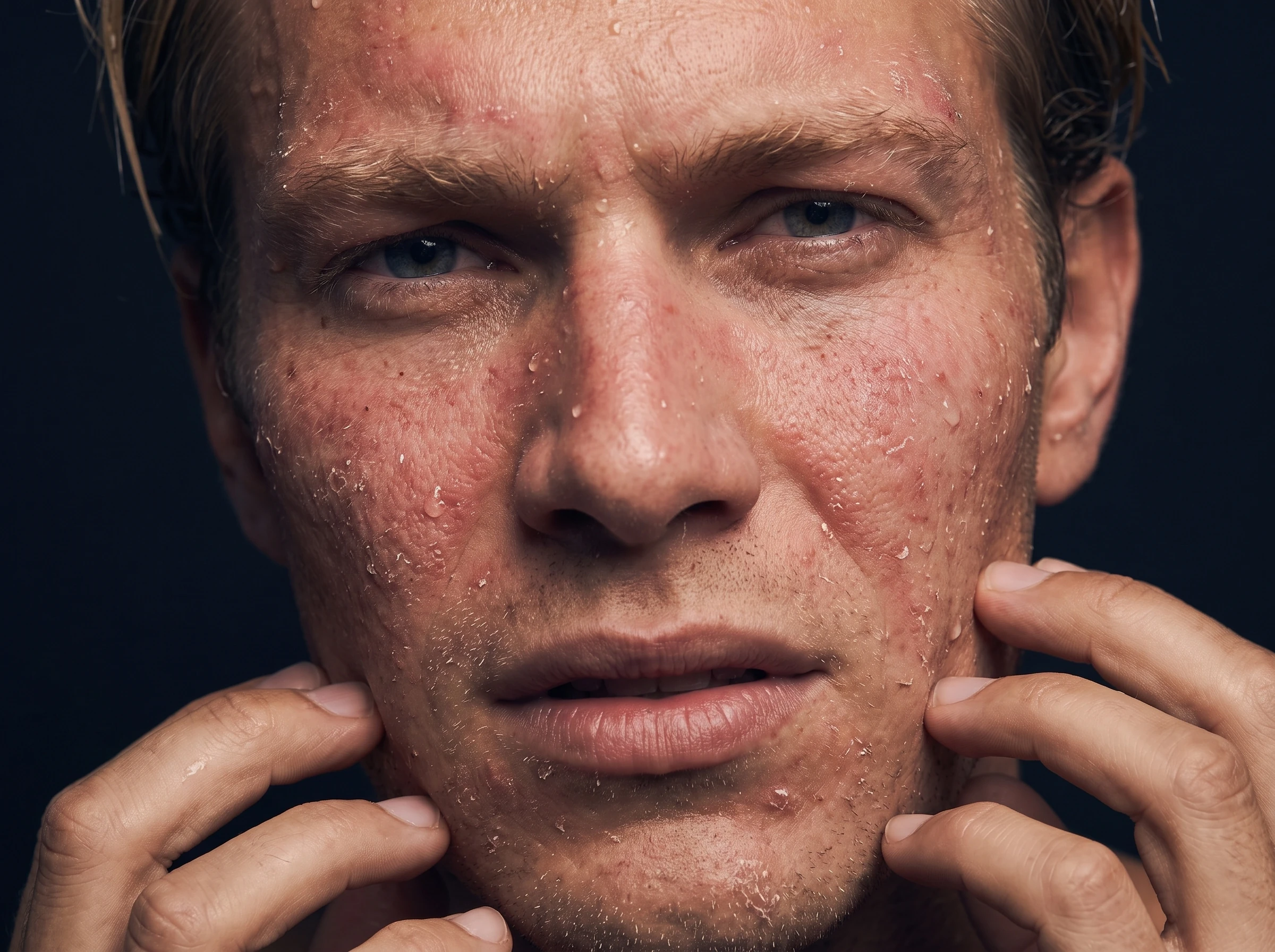
The moisturizer you've used for two years stings now. Nothing about the moisturizer changed. That's the strange, disorienting signature of a damaged skin barrier: the problem doesn't announce itself as an injury, it announces itself as your skin suddenly disagreeing with your entire life. Products that were fine turn hostile. Your face feels tight an hour after you moisturized it. There's flaking, and adding more cream doesn't fix the flaking.
The reflex at this point is to buy something. Usually the reflex is wrong. A compromised barrier is almost always the result of too much rather than too little, and the repair is mostly a matter of removing things.
What is the skin barrier?
The skin barrier is the stratum corneum, the outermost layer of your epidermis and the part of you that faces the world directly. It's built from two components: corneocytes, flattened dead skin cells packed tightly together, and a lipid matrix surrounding them made mostly of ceramides, fatty acids, and cholesterol.
This is where the bricks-and-mortar analogy comes from. The corneocytes are the bricks, the lipid matrix is the mortar holding them in place and sealing the gaps. Both are necessary. You can have all the bricks intact and still have a wall that leaks if the mortar is gone, roughly what happens to over-cleansed skin.
A functioning barrier does three jobs. It keeps water in, preventing evaporation through the skin. It keeps irritants, allergens, bacteria, and pollutants out. And it maintains a slightly acidic surface pH, around 4.5 to 5.5, which supports the skin's own antimicrobial defenses. When the barrier is compromised, all three jobs degrade at once, which is why the symptoms arrive as a cluster rather than one at a time.
Signs of a damaged skin barrier
The clearest sign is new reactivity: products you used to tolerate now sting, burn, or leave you red. Skin that objects to everything is usually skin whose barrier is letting everything in.
- Tightness that persists after cleansing and doesn't resolve with moisturizer
- Flaking and roughness, sometimes patchy, sometimes across the whole face
- Stinging or burning on application, especially with actives you previously used without issue
- Redness without an obvious trigger
- Dullness, because a disrupted surface scatters light unevenly
Underneath most of these is a measurable phenomenon: transepidermal water loss, or TEWL, water evaporating out through the skin. TEWL is the standard method researchers use to quantify barrier function, precisely because it's objective. Higher TEWL means a barrier that's sealing less effectively, and higher readings have been observed across a range of skin conditions.
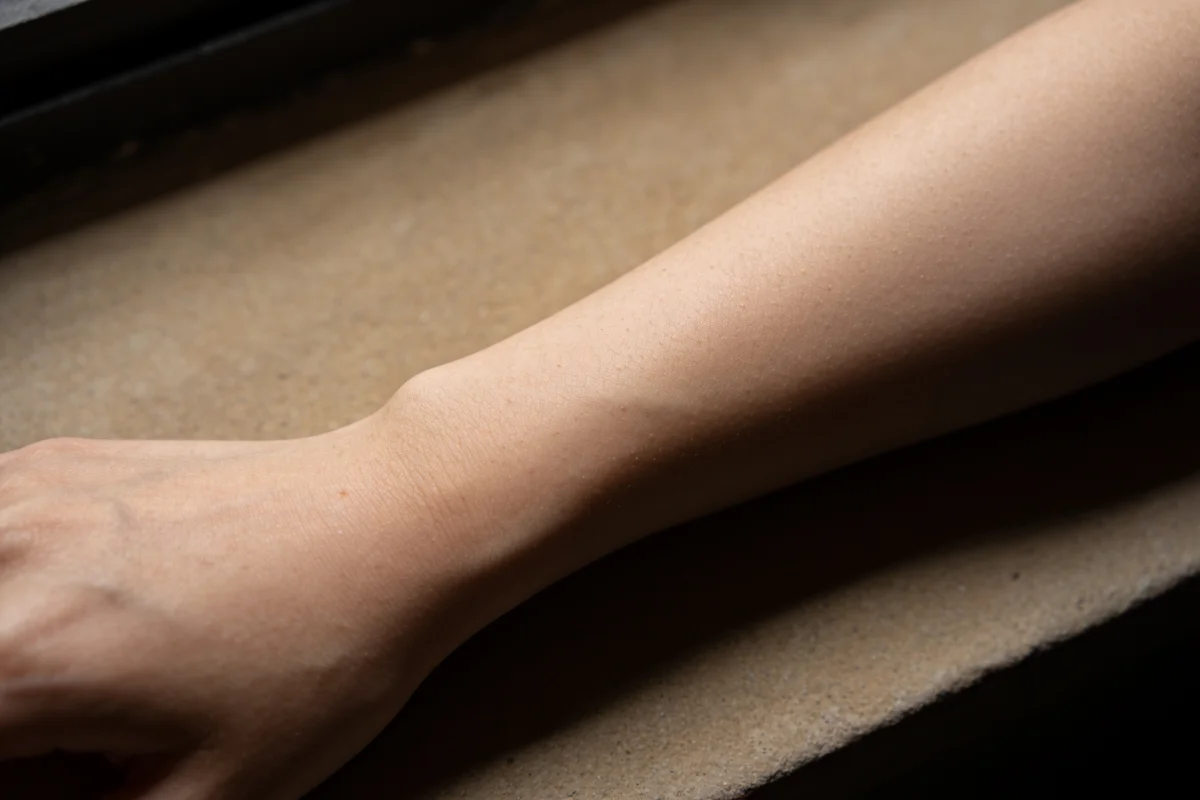
"TEWL measured 9.98 on healthy skin, 25.51 on unaffected skin of people with atopic dermatitis, and 28.38 on eczematous lesions (g per m² per hour, volar forearm)."Source: Hernández-Martín et al., 2022
Those numbers describe forearms, not faces, and they compare people with atopic dermatitis to healthy volunteers rather than measuring over-exfoliated skin. But they make the concept concrete: barrier impairment roughly tripled water loss, and notably, even the unaffected skin of people with atopic dermatitis leaked substantially more than healthy skin. Barrier function isn't binary. It's a dial, and yours has a position right now.
Less friction, by design
Barrier repair is mostly about removing stressors, and drag from a towel is one of them. KALMER is a soft single-use face towel, made to pat with rather than scrub.
Shop KALMERWhat damages the skin barrier
The most common cause is accumulated over-care rather than a single aggressive product. Nobody destroys their barrier in one afternoon. They do it across six weeks of small, well-intentioned decisions that each seemed like a good idea.
- Over-washing. Every cleanse takes lipids along with the dirt. Washing more than twice daily compounds the effect, covered in more depth in our guide to how often to wash your face.
- Hot water. It strips lipids from the surface about as efficiently as a harsh cleanser does. Lukewarm isn't a preference, it's the mechanism.
- Over-exfoliation. Chemical acids, scrubs, and at-home devices all remove surface material. Used sparingly, fine. Stacked, daily, they outpace your skin's ability to rebuild.
- Too many actives at once. Retinoids plus acids plus vitamin C, layered by someone following four different routines from four different people online.
- Friction. Scrubbing with washcloths, sponges, or a towel. The AAD advises using fingertips rather than washcloths or mesh sponges specifically because the extra friction irritates skin.
- Fragrance and allergens, which a compromised barrier lets through more readily than a healthy one, creating a loop where the damage increases the exposure that causes the damage.
Some people start with less margin. A genetic predisposition to eczema, psoriasis, or rosacea means a structurally more vulnerable barrier, and filaggrin gene mutations, closely associated with atopic dermatitis, affect the structural integrity of the stratum corneum directly. For that group, barrier care isn't a repair phase you complete. It's the ongoing baseline.
There's a loop hiding in this. A compromised barrier lets more irritants through, and irritants provoke inflammation, and inflammation further degrades the barrier. This is why a bad reaction to one product can cascade into months of reacting to everything, long after you stopped using the original culprit. It also explains why the fix has to start with removing the input rather than adding a repair product on top: you can't out-cream an ongoing exposure.
How to repair a damaged skin barrier
Repair is subtraction first, addition second. Strip your routine back to a gentle, fragrance-free cleanser and a bland moisturizer. That's the whole routine for a while. No acids, no retinoids, no vitamin C, no scrubs, no devices, no new products bought in a panic because your skin is bad right now.
Then adjust the mechanics. Lukewarm water, not hot. Cleanse in the evening, consider water only in the morning, since cleansing after a night of your skin repairing itself mostly strips what it just rebuilt. Apply moisturizer while skin is still slightly damp so there's water to seal in. Pat dry with something clean and soft rather than dragging a towel across your face, and keep your face towel genuinely clean, since a barrier that's already letting things through isn't the one you want reintroducing bacteria to.
Look for barrier-supportive ingredients rather than corrective ones: ceramides, which are literally the mortar; humectants like glycerin or hyaluronic acid to draw water in; and occlusives to seal it. Avoid fragrance entirely during repair, which is harder than it sounds given that fragrance-free labels are unregulated and 45 percent of moisturizers carrying that claim contained a fragrance cross-reactor when researchers checked.
One more thing worth saying plainly: barrier repair is not a product category. It's a period of restraint. The market has responded to the popularity of the term with a wall of products promising to fix your barrier, and some of them contain genuinely useful ingredients. None of them work while you're still doing the thing that broke it. If you buy the ceramide cream and keep exfoliating twice a week because the flaking looks like it needs exfoliating, you've added a cost and changed nothing. The flaking is not congestion. It's damage.
Then wait. Mild irritation can settle within one to two weeks. A badly compromised barrier can take a month or more. The failure mode here is impatience: at day nine, skin still looks bad, and the temptation to add something is enormous. Adding something is how you got here.
When to see a dermatologist
See a board-certified dermatologist if symptoms persist despite a stripped-back routine, if you have a rash, weeping, cracking, or open skin, if the irritation is spreading, or if you suspect an allergy and want to know what you actually react to rather than guessing. Persistent dryness, redness, and reactivity are also how eczema, rosacea, seborrheic dermatitis, and contact dermatitis present, and those are conditions with real treatments that a simplified routine won't resolve on its own.
Your skin barrier is the stratum corneum: cells packed in a lipid mortar of ceramides, fatty acids, and cholesterol, keeping water in and irritants out. Damage shows up as stinging, tightness, flaking, redness, and sudden intolerance of products that were fine last month, usually caused by accumulated over-care rather than one bad decision. Repair by removing: fewer washes, cooler water, no exfoliation, no actives, no fragrance, less friction. Then a gentle cleanser, a bland moisturizer, and patience measured in weeks. Your skin isn't asking for more. It's asking for less.
Frequently asked questions
What are the signs of a damaged skin barrier?
+
Stinging or burning when you apply products, persistent tightness, flaking that moisturizer doesn't resolve, redness, roughness, and new sensitivity to products you previously tolerated. Skin that reacts to everything is usually skin whose barrier is compromised.
How long does it take to repair a skin barrier?
+
Expect weeks, not days. Mild irritation can settle in a week or two once you remove what's causing it, while a badly compromised barrier can take a month or more. The main mistake is declaring failure early and adding another product.
Can over-washing damage your skin barrier?
+
Yes. Every wash removes some of the lipids holding the barrier together, and hot water strips them about as efficiently as a harsh cleanser. Washing more than twice daily compounds the effect, which is why cutting back is often the first step in repair.
What is transepidermal water loss?
+
Transepidermal water loss, or TEWL, is water evaporating out through your skin. It's the standard way researchers measure barrier function: higher TEWL means the barrier is sealing less effectively. It's why a compromised barrier feels dry no matter how much moisturizer you apply.
Sources
- Del Rosso J, Zeichner J, Alexis A, et al. (2016). Understanding the epidermal barrier in healthy and compromised skin. Journal of Clinical and Aesthetic Dermatology, 9(4 Suppl 1):S2-S8.
- Hernández-Martín A, et al. (2022). Epidermal Barrier Function and Skin Homeostasis in Atopic Dermatitis: The Impact of Age.
- American Academy of Dermatology, Face washing 101
- American Academy of Dermatology, Acne: tips for managing
- Penetration rates into the stratum corneum layer: a novel quantitative indicator for assessing skin barrier function (2024).