Does sweat cause acne? What actually happens
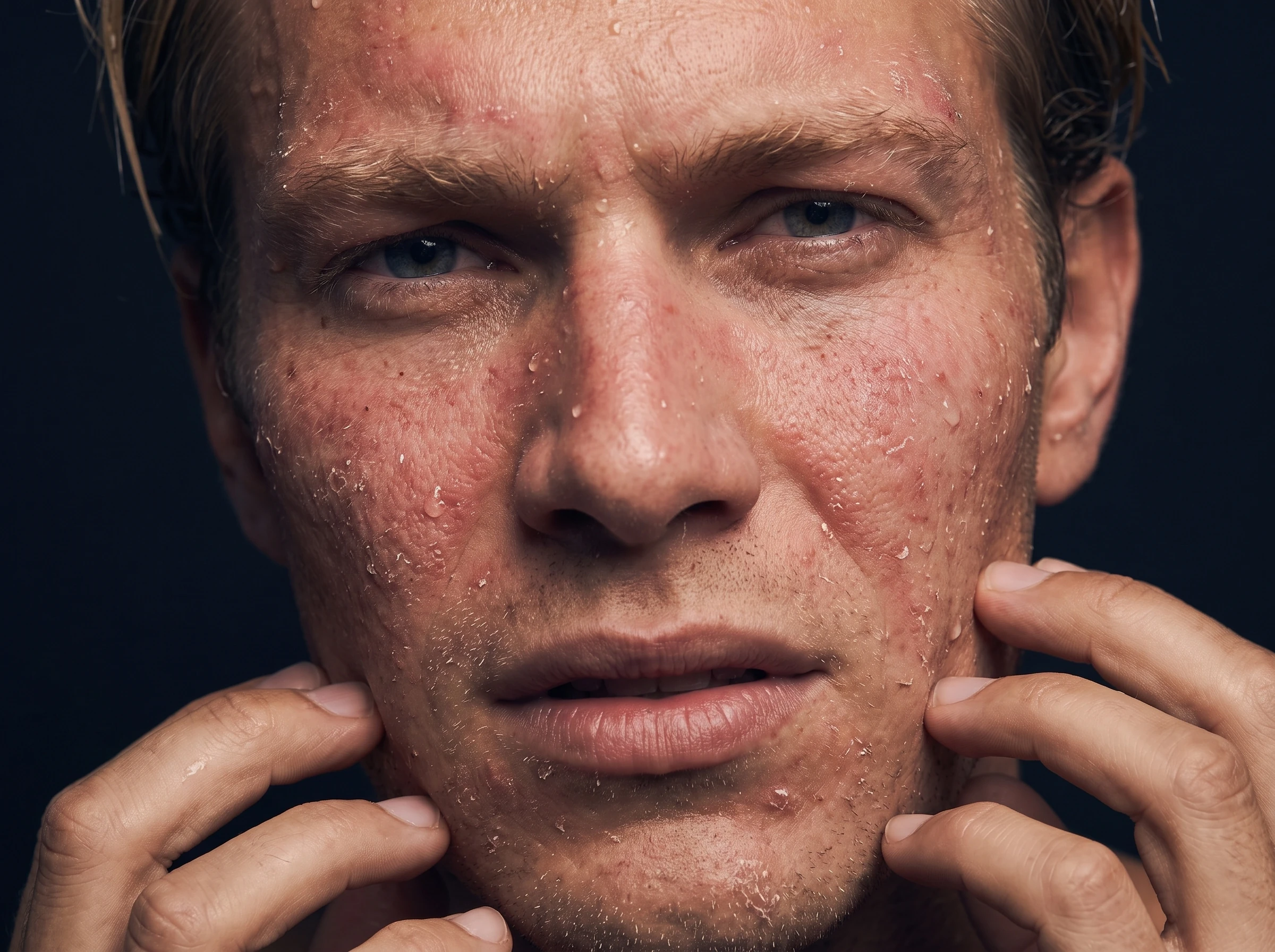
Here's the thing nobody wants to hear about post-workout breakouts: the workout is innocent. Does sweat cause acne? Not on its own. Dermatologists are unusually consistent about this, and the honest answer redirects the blame to everything happening around the sweat, which is inconvenient because that part is your fault and the sweat wouldn't have been.
Exercise itself doesn't cause acne. What can affect your skin are the skincare habits you keep around your workouts. That framing, from board-certified dermatologists at the American Academy of Dermatology, is the whole article in two sentences. The rest is detail about which habits.
Does sweat cause acne?
Sweat doesn't inherently cause acne, but sweat that isn't properly rinsed off can contribute to clogged pores and breakouts. That distinction is the one dermatologists keep drawing, and it's worth being precise about because it changes what you do.
Sweating is a normal function. It cools you, and during exercise increased blood flow to the skin is arguably doing you favors. The problem is dwell time. Sweat that dries down and sits on skin, mixed with oil, dirt, and whatever was on your hands and equipment, gives bacteria a warm damp environment to work in and gives pores something to be clogged by. The mechanism isn't the sweat, it's the sitting.
This is why post-workout breakouts tend to appear where sweat accumulates and where things press against you: forehead under a headband, chin under a strap, back and chest under a damp shirt. The distribution is a clue. Ordinary acne doesn't usually respect the outline of your gear.
The documented mechanism: acne mechanica
Friction, pressure, heat, and occlusion cause a specific, well-documented form of acne called acne mechanica: an acne-like eruption in areas of friction, pressure, stretching, rubbing, or occlusion, in anyone, regardless of whether they already have acne.
The evidence here is genuinely strong, and it comes from sport. Acne mechanica is frequently observed in American football players, most commonly on the chin, likely from the helmet's chin strap, and in most affected athletes it improves dramatically or clears entirely once the competitive season ends. Remove the friction, the acne goes. That pattern is what tells dermatologists the driver is pressure and friction rather than the multifactorial process behind acne vulgaris, and it's also why standard acne antibiotics are less effective against it.
"Acne mechanica in athletes improves dramatically or resolves completely in most cases at the end of the competitive season."Source: Dermatology Times, reviewing acne mechanica
Masks produced the same effect at scale. What people called maskne was acne mechanica: mechanical stress on the cheeks, jaw, and mouth from a covering, plus heat and occlusion underneath it. Same mechanism, new equipment. It's worth noticing what this implies about where you should look. If your breakouts trace the strap of your bag, the edge of your headband, or the rim of your goggles, that isn't a coincidence and it isn't hormonal. The map is the diagnosis, and the fix is mechanical: loosen it, pad it, change the material, or reduce how long it sits against damp skin. Equipment with moisture-wicking liners pulls sweat away from skin instead of trapping it, addressing two of the four contributing factors at once.
The relevance to sweat is that heat and moisture make friction worse. Damp skin under a strap is more vulnerable than dry skin under the same strap. Sweat isn't the cause, but it's an accelerant for the thing that is.
A clean towel, every time
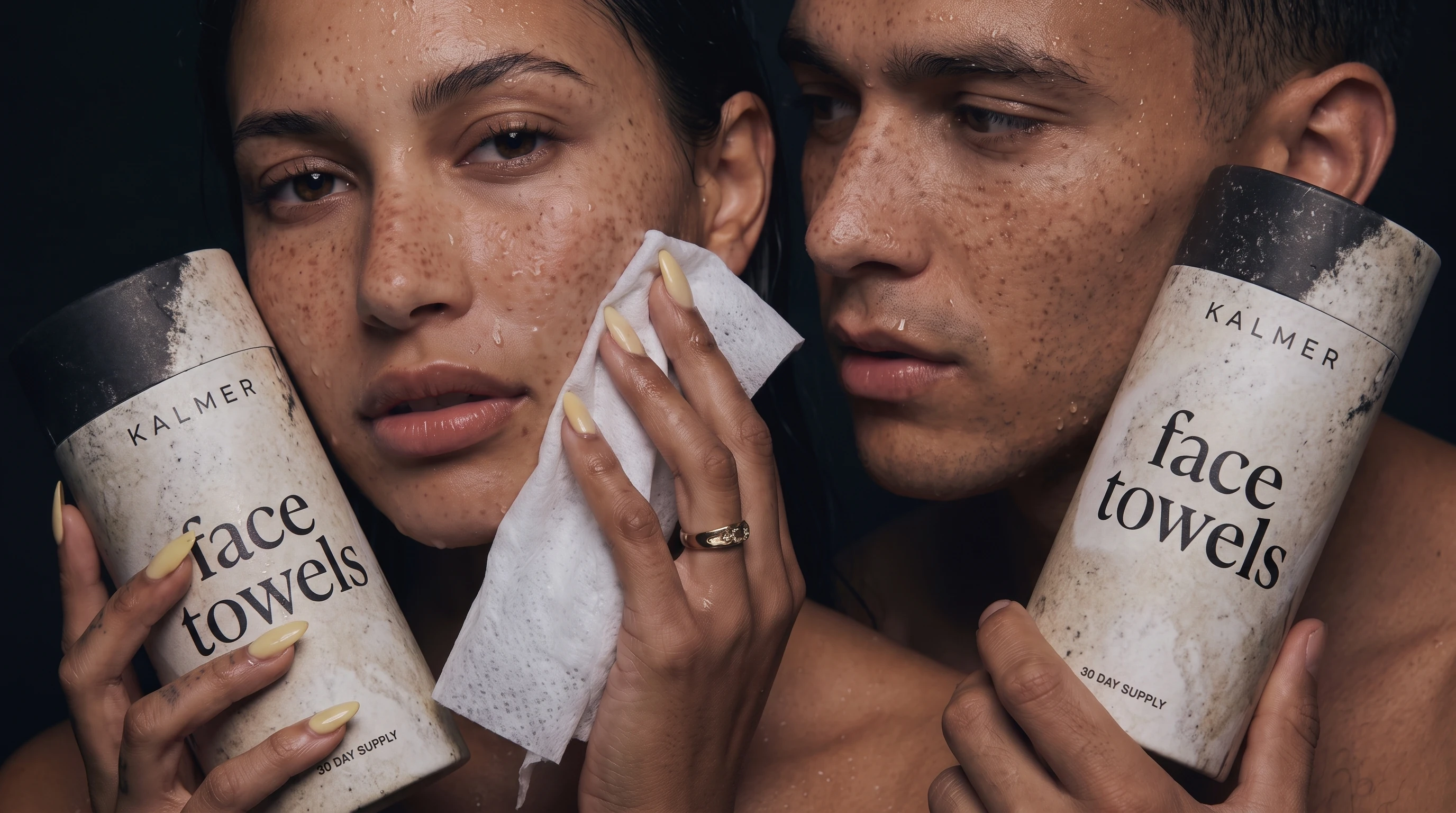
The post-workout advice is to blot sweat with a clean towel. KALMER is single-use, so you never have to audit whether it's clean.
Shop KALMERWhat to do before, during, and after a workout
Wash after sweating, blot rather than rub, and get out of damp clothes promptly. The AAD includes washing after heavy sweating in its face-washing guidance, alongside the standard twice daily, and this is one of the rare cases where an extra wash is the right call rather than over-washing.
Before you train, start with clean skin and skip heavy makeup, which combines with sweat to sit in pores for an hour. If you're unsure what your baseline should be, our guide to how often to wash your face covers the frequency question, and washing after heavy sweating is the one addition dermatologists actively endorse. If you're outdoors, use an oil-free sunscreen; sun dries skin, and dry skin can respond by producing more oil.
During the workout, this is the part most people get wrong. The AAD lists roughly rubbing sweat away with a towel as a habit that worsens acne, on the grounds that the friction irritates skin, and its recommendation is to gently blot sweat with a clean towel instead. Two words are doing work there: gently, and clean. Most people fail both, dragging a towel across their face that's lived in a gym bag since the weekend. Try not to touch your face otherwise, and wipe down shared equipment before you use it.
After, shower promptly with lukewarm water and a gentle, non-comedogenic cleanser, then change into clean clothes and actually wash the ones you took off. If you can't shower immediately, blotting sweat off and getting out of the damp shirt buys you real time. Don't scrub, and don't reach for astringents in the belief that you need to strip the sweat off aggressively. The AAD advises against astringents, toners, and exfoliants for acne-prone skin, because they dry skin out and can make acne look worse.
The gym towel is a genuine blind spot. It's damp, it lives folded in a warm bag, it gets shared or reused across sessions, and then it's pressed against the exact skin the AAD is asking you to keep clean and low-friction. It fails on both counts at once: it's the thing you rub, and it's the thing that isn't clean. Every other post-workout instruction assumes a clean towel, and almost nobody actually has one.
What sweating does not do
It does not flush toxins out through your pores, and sweating more is not a treatment. This deserves saying because the inverse myth is common: the idea that a hard session sweats impurities out, and breaking out afterward is a purge working. Neither half holds up. Sweat is thermoregulation, not filtration. It's mostly water and salt, produced to cool you down, and it's not a waste-disposal system. A breakout after a workout is a breakout, not evidence that something worked.
It also doesn't clear acne. If your skin improves when you start exercising regularly, the plausible explanations are stress, sleep, and general health rather than the sweat itself, and none of those are things you can put in a bottle. Acne remains driven by oil, dead skin cells, pores, bacteria, hormones, and inflammation. Managing the hygiene around your workout removes avoidable irritants. It doesn't touch the underlying process, and no amount of towel discipline substitutes for treatment.
This is the same conclusion every hygiene question reaches once you look at it properly. Variables like your towel and your gear are worth controlling because they're cheap and controllable, not because they're the cause. If your routine itself needs work, start with the basics rather than the accessories. The useful interventions are mechanical and boring: reduce dwell time, reduce friction, keep what touches your face clean. Nothing on that list is a product breakthrough, and all of it is within your control by Thursday.
When to see a dermatologist
Acne has many causes, including genetics, hormones, stress, and medications, and if you're following the hygiene advice and still breaking out, that's the signal to stop optimizing your gym bag. See a board-certified dermatologist if acne persists after a few months of consistent care, if breakouts are leaving dark marks or scars, if you have painful nodules or cysts, or if the pattern is spreading. If your breakouts follow the outline of your gear precisely, mention that: acne mechanica is managed differently from ordinary acne.
Sweat doesn't cause acne. Sweat left sitting can contribute to clogged pores, and friction, pressure, heat, and occlusion cause acne mechanica, the mechanism actually doing the damage in most post-workout breakouts. Wash after heavy sweating, blot with a clean towel instead of rubbing, change out of damp clothes, and wipe down shared equipment. Then check whether the towel you're blotting with meets the standard the advice assumes, because it usually doesn't. And if you've done all of it and your skin hasn't changed, the answer was never in the gym bag, and no amount of barrier care will substitute for treatment that works.
Frequently asked questions
Does sweat cause acne?
+
Not by itself. Dermatologists note that exercise doesn't cause acne, but sweat left sitting on the skin can contribute to clogged pores, and the friction and heat around workouts are documented acne triggers. The habits around sweating matter more than the sweat.
Should I wash my face after every workout?
+
Yes. The American Academy of Dermatology recommends washing after heavy sweating, in addition to the usual twice daily. If you can't get to a sink right away, blotting sweat off with a clean towel and changing out of damp clothes are reasonable stopgaps.
Why do I break out where my helmet or headband sits?
+
That's the signature pattern of acne mechanica, caused by friction, pressure, heat, and occlusion rather than by ordinary acne processes. It shows up exactly where equipment contacts skin, and typically improves when the friction is removed.
Is it bad to wipe sweat off your face during a workout?
+
Wiping roughly is. The AAD advises against rubbing sweat away with a towel because the friction irritates skin and can lead to breakouts, and recommends gently blotting with a clean towel instead.
Sources
- American Academy of Dermatology, How your workout can affect your skin
- American Academy of Dermatology, 10 skin care habits that can worsen acne
- American Academy of Dermatology, Acne: tips for managing
- American Academy of Dermatology press release (2020). How to Break a Sweat, Without Causing Acne (Elizabeth Bahar Houshmand, MD, FAAD)
- Dermatology Times, Acne mechanica caused by skin on skin friction