Fungal Acne: What It Is and How to Handle It
Here is a frustrating scenario a lot of people know well. You have small bumps across your forehead, you treat them like acne for months, and nothing works. Some products even seem to make it worse. There is a good chance the problem is not acne at all. Fungal acne is not really acne, and that single fact explains why the usual routine fails against it and what to do instead.
The name is misleading, which is most of the problem. This is a yeast issue wearing an acne costume, and the treatments for the two conditions are different. Here is what fungal acne actually is, how to recognize it, and why an accurate diagnosis is the whole game.
What is fungal acne?
Fungal acne is an overgrowth of yeast in the hair follicles, clinically known as Malassezia folliculitis or Pityrosporum folliculitis. It is not caused by the oil, dead skin, and bacteria behind common acne. It is caused by Malassezia, a yeast that lives on everyone's skin as a normal part of the microbiome and, under the right conditions, multiplies and inflames the follicles.
That distinction is not a technicality. Because the cause is fungal rather than bacterial or purely oil-driven, the products that work on ordinary acne do not work here, and some make it worse. This is why fungal acne is so often misdiagnosed: it looks close enough to acne vulgaris that people treat it as acne for months before anyone suspects yeast. A dermatology case report described exactly this, a woman treated for acne for months with no improvement before Malassezia folliculitis was identified and antifungal treatment cleared it within weeks.
The yeast itself is not an infection you catch from outside. It is already on your skin. Fungal acne happens when the balance tips and it overgrows, which means managing it is largely about the conditions that let it overgrow.
The last step matters
Calm starts with a clean surface.
Shop face towels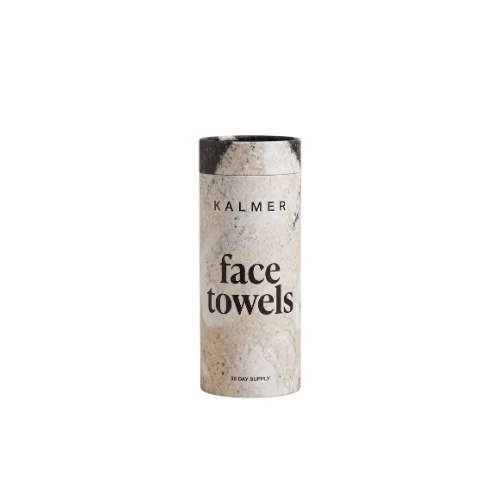
What fungal acne looks like
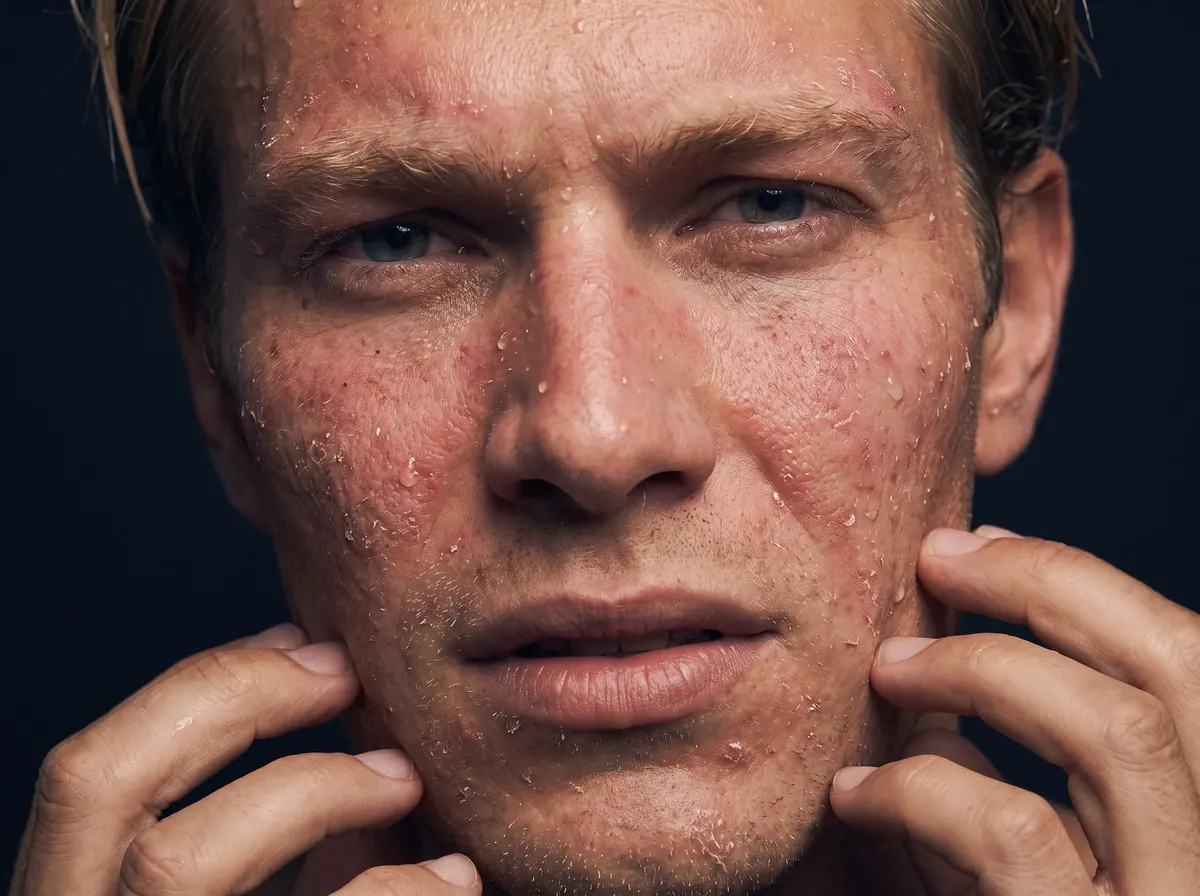
Fungal acne shows up as small, uniform, often itchy bumps clustered together, most commonly on the forehead, chest, back, and shoulders. The two features that separate it from regular acne are uniformity and itch.
Uniformity first: fungal acne bumps tend to be the same size and shape, often 1 to 2 millimeters, clustered so evenly they can look almost mass-produced. Regular acne is messier, with blackheads, whiteheads, papules, and the occasional larger inflamed spot all mixed together in different sizes. Then the itch. Ordinary acne does not usually itch. Fungal acne frequently does.
"Itching is present in roughly 80% of Malassezia folliculitis cases, a feature that helps separate it from common acne."Source: Rubenstein and Malerich, J Clin Aesthet Dermatol, 2014
Location is another clue, and it is one of the clearest ways fungal acne differs from closed comedones, which cluster instead in the oily T-zone. Fungal acne loves the areas where heat and sweat collect: the hairline and forehead, the chest, the upper back, the shoulders. If your breakouts are concentrated there, are all a similar size, and itch, especially after a workout, fungal acne moves up the list of suspects. None of this replaces a dermatologist's diagnosis, but it tells you when to stop treating the problem as ordinary acne.
| Feature | Fungal acne | Common (bacterial) acne |
|---|---|---|
| Cause | Malassezia yeast overgrowth | Oil, dead skin, bacteria, hormones |
| Bump size | Uniform, all similar | Varied, mixed types |
| Itch | Often itchy | Usually not itchy |
| Common areas | Forehead, chest, back, shoulders | Face, especially T-zone and jaw |
| Responds to acne products | No, can worsen | Yes |
| Treated with | Antifungals | Standard acne care |
The last step matters
Calm starts with a clean surface.
Shop face towelsWhat causes it to flare
Fungal acne flares when conditions let the yeast overgrow, and those conditions are mostly about warmth, moisture, and occlusion. Malassezia is lipophilic, meaning it feeds on oil, and it thrives in warm, humid, damp environments. Anything that creates that environment on your skin can tip the balance.
The usual triggers: heavy sweating and hot, humid weather; tight or damp clothing that traps heat and moisture against the skin; oily or occlusive skincare products that feed the yeast and seal it in; and, notably, recent courses of oral antibiotics, which can clear away bacteria and leave room for yeast to expand. There is a seasonal pattern to it, too. Many people notice fungal acne worsen in summer or in humid climates, and improve in cooler, drier months, which fits the biology exactly: the yeast is responding to heat and moisture, not to anything you did or did not buy. Adolescents and young adults are more prone, as are people whose immune function is affected by health conditions or medications.
The practical read on that list: the same damp, warm, occluded conditions keep coming up. Which is why so much of the dermatologist advice for managing fungal acne is about removing those conditions rather than applying something.
A dry surface is not a damp one
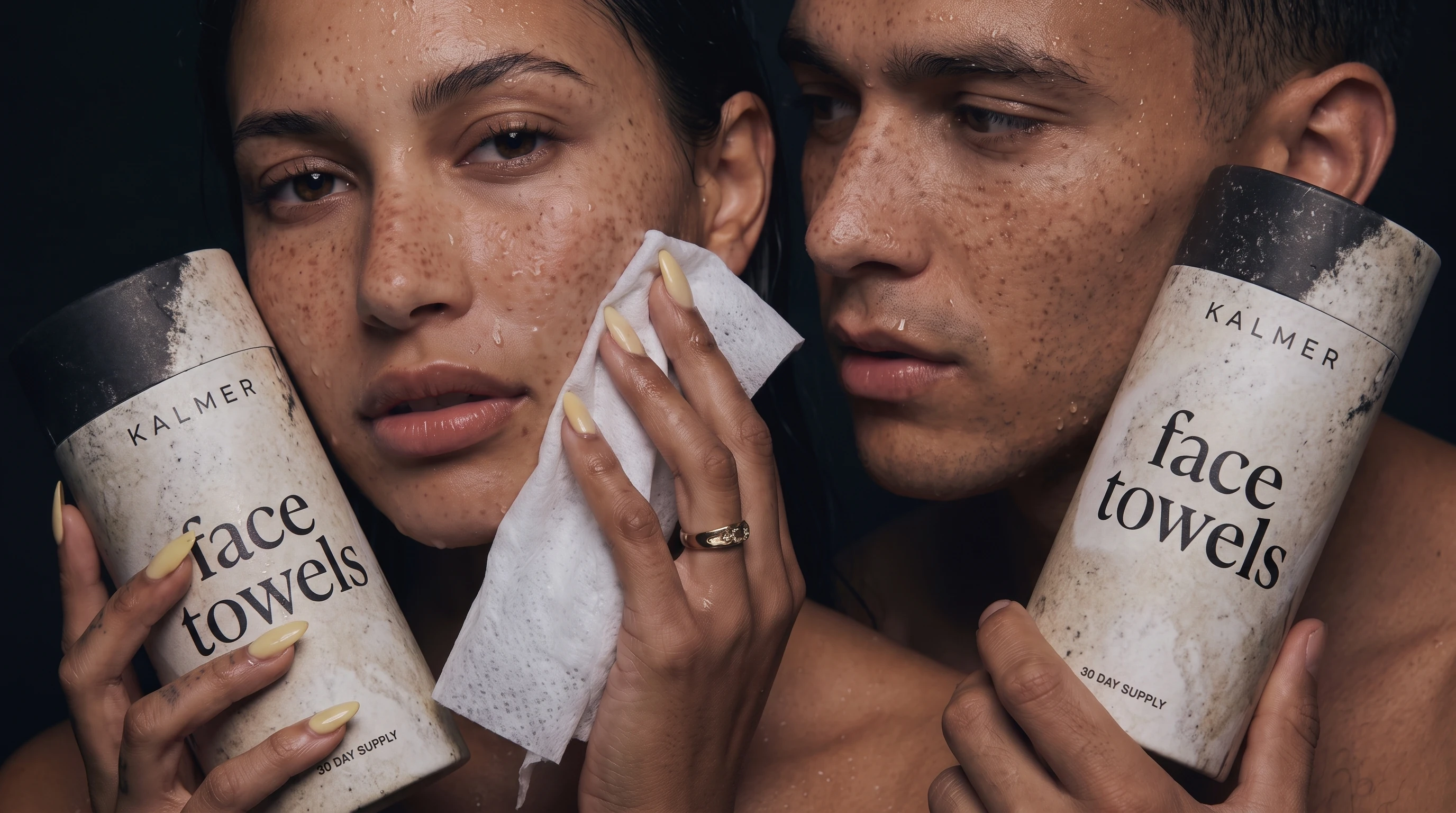
Malassezia thrives in warm, damp conditions, which is why dermatologists point to keeping skin dry. KALMER is a single-use face towel: dry and clean every time, so the towel that meets your skin is never the damp one on the hook.
Shop KALMERWhy it matters: the treatment is different
The last step matters
Calm starts with a clean surface.
Shop face towelsFungal acne is treated with antifungal medication, not acne medication, and using the wrong one wastes months. Healthcare providers treat Malassezia folliculitis with topical or oral antifungals, and improvement is often noticeable within days to weeks once the correct treatment begins.
Standard acne products are the trap. Many are oil-based or occlusive, and some antibiotic acne treatments can actually encourage yeast by clearing competing bacteria, which is the opposite of what you want. So the person diligently attacking their "acne" with a heavier routine can be feeding the exact thing causing it. This is the single most useful thing to understand about fungal acne: the harder you treat it as acne, the more entrenched it can get.
Because the two conditions look alike and can even coexist, self-diagnosis has limits. A dermatologist can confirm Malassezia folliculitis with a simple examination or a quick microscopic test, and that confirmation is what turns months of frustration into a treatment that works. If your bumps are uniform, itchy, and unmoved by everything you have tried, that is the appointment to make.
Fungal acne and common acne can exist on the same face at the same time, which is part of why it is so confusing. You can be treating genuine acne correctly on your cheeks while a fungal flare on your forehead ignores the same products entirely. If one region of your face responds to your routine and another stubbornly does not, that split is itself a clue worth mentioning to a dermatologist.
Managing the conditions it favors
Beyond the medication a dermatologist prescribes, managing fungal acne means reducing the warm, damp conditions the yeast likes. Dermatologist prevention advice is consistent and unglamorous: shower and change out of sweaty clothes promptly after exercise, wear loose breathable clothing in heat and humidity, avoid heavy occlusive products during a flare, and do not let damp fabric sit against your skin.
The last step matters
Calm starts with a clean surface.
Shop face towelsThat last point is where everyday hygiene meets the biology. The yeast favors damp surfaces, so the fabrics that touch your skin matter. Reused gym clothes, damp towels left on a hook, and sweaty hats all create small warm, moist environments against the skin. The towel you dry with is part of that picture: a towel that hangs damp in a humid bathroom is exactly the warm, moist fabric the yeast favors, and it presses against your skin at the end of every wash. Keeping those clean and dry does not treat fungal acne, and nothing you dry your face with will cure a yeast overgrowth. But reducing prolonged contact with damp fabric is a sensible part of the same hygiene picture dermatologists describe, and it is entirely within your control. The sweat and acne question runs on the same logic: it is not the sweat itself, it is what sits on skin afterward.
If you want a clean, dry surface for the drying step specifically, a single-use towel is one way to make sure the fabric meeting your skin is never the damp one that has been hanging in a humid bathroom. KALMER is built for that: dry and clean every time, no reused damp towel in the equation. Not a treatment, just one damp variable removed.
It helps to hold the honest boundary here clearly, because the internet is full of products promising to banish fungal acne. Hygiene habits reduce the conditions the yeast likes. They do not kill the yeast, and they are not a substitute for the antifungal a dermatologist prescribes. Think of them as removing fuel, not putting out the fire. Keeping skin cool and dry, changing out of sweaty clothes, and not letting damp fabric linger on your face are all reasonable and all within your control, and none of them is a treatment. That distinction is worth protecting, because the moment a habit gets sold as a cure, you stop looking for the thing that actually works.
When to see a dermatologist
See a board-certified dermatologist if you have bumps that are uniform, itchy, and unresponsive to acne treatment, if breakouts flare reliably after sweating, or if you have been treating "acne" for weeks or months with no improvement. Fungal acne needs a diagnosis and the right antifungal to clear, and the longer it is treated as ordinary acne, the longer it lingers. A dermatologist can confirm it quickly and prescribe treatment that actually targets the cause, which is worth far more than another acne product that was never going to work.
Fungal acne is not acne. It is an overgrowth of Malassezia yeast in the hair follicles, and its tells are uniform, itchy bumps clustered on the forehead, chest, back, and shoulders that ignore or worsen with regular acne products. It is treated with antifungals, not acne medication, so an accurate diagnosis from a dermatologist is the thing that ends the cycle. If a clean, dry drying surface is one variable you would rather not think about, KALMER is a single-use cotton towel: dry every time, never the damp cloth on the hook.
Frequently asked questions
What is fungal acne?
+
Fungal acne, medically called Malassezia or Pityrosporum folliculitis, is an overgrowth of Malassezia yeast inside the hair follicles. The yeast is a normal part of skin, but under certain conditions it multiplies and inflames the follicles, causing small itchy bumps that look like acne but are not.
How do I know if my acne is fungal?
+
Look for bumps that are uniform in size, itchy, and clustered on the forehead, chest, back, or shoulders, especially if they flare after sweating and have not improved with normal acne products. Itchiness and uniformity are the strongest clues, but only a dermatologist can confirm it.
Can you get rid of fungal acne?
+
Yes. It is treated with antifungal medications, topical or oral, prescribed by a healthcare provider, and it often clears quickly once the right treatment starts. Standard acne treatments do not work on it and can prolong it, which is why an accurate diagnosis matters.
What makes fungal acne worse?
+
Warm, humid conditions, heavy sweating, tight or damp clothing, oily and occlusive skincare products, and recent courses of oral antibiotics can all encourage the yeast to overgrow. Keeping skin cool, clean, and dry helps limit the conditions it favors.
Sources
- Cleveland Clinic, Fungal Acne (Malassezia Folliculitis)
- DermNet, Malassezia (pityrosporum) folliculitis
- Rubenstein RM, Malerich SA (2014). Malassezia (Pityrosporum) Folliculitis. Journal of Clinical and Aesthetic Dermatology, 7(3):37-41.
- Malassezia (Pityrosporum) Folliculitis Masquerading As Recalcitrant Acne (2021)
- American Academy of Dermatology, Acne: tips for managing