Fungal Acne vs Closed Comedones: How to Tell
You have small bumps on your forehead. They could be fungal acne or they could be closed comedones, and they look close enough that guessing wrong is easy. The problem is that guessing wrong is expensive: fungal acne vs closed comedones is not a cosmetic distinction, it is two different conditions that need opposite treatments. Treat one as the other and you can spend weeks making no progress, or make things worse.
The good news is that two quick checks get you most of the way there before you ever see a dermatologist. Here is how to tell them apart, why it matters so much, and what to do once you have a suspicion.
The fast answer: itch and uniformity
The two quickest tells are whether the bumps itch and whether they are all the same size. Fungal acne is usually itchy and uniform. Closed comedones are usually not itchy and vary in size. Those two questions resolve most cases on sight.
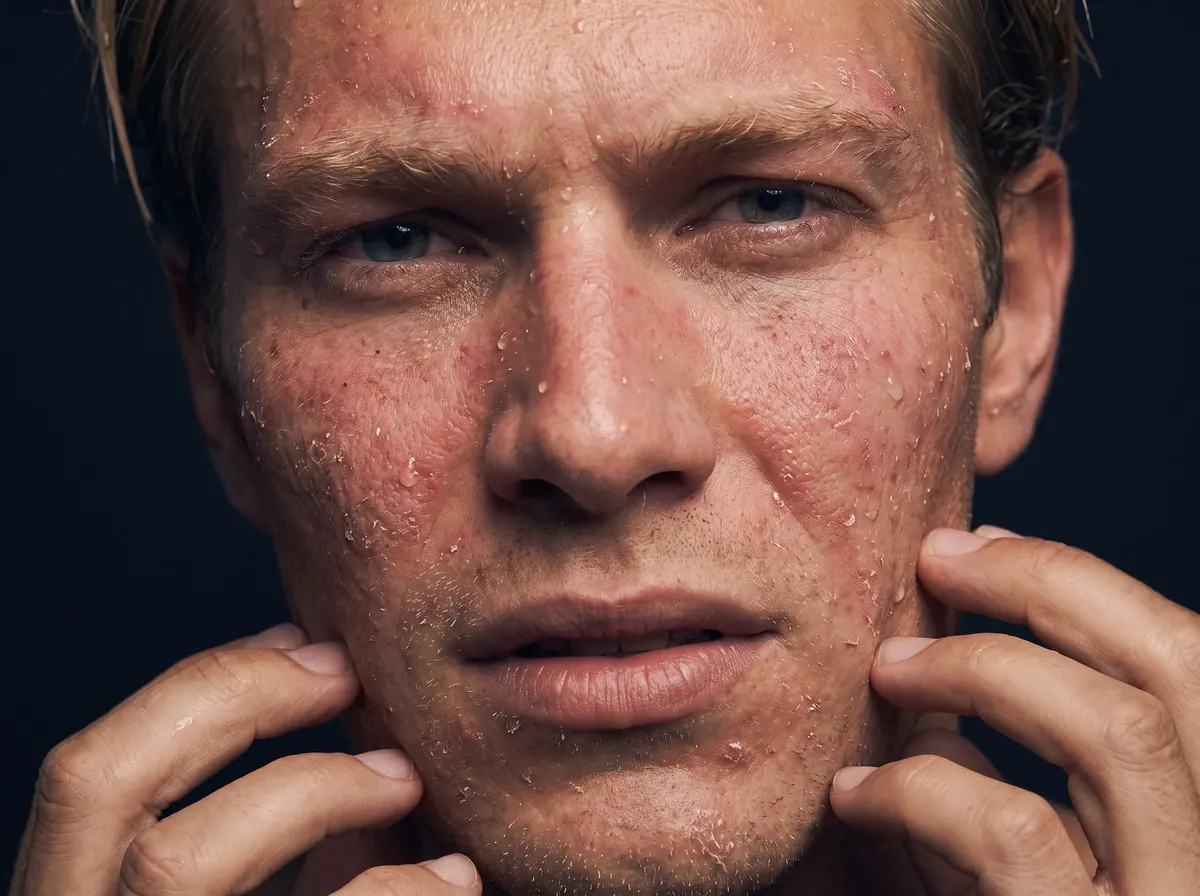
Fungal acne, clinically Malassezia folliculitis, is an overgrowth of yeast in the hair follicles, and it tends to produce clusters of bumps that are strikingly uniform, often the same small size and shape, accompanied by itch. Closed comedones, better known as whiteheads, are clogged pores: a mix of oil, dead skin cells, and debris trapped under a closed layer of skin. They are typically flesh-colored or white, vary more in size and distribution, and do not itch. If your bumps itch, especially after sweating, lean fungal. If they are painless but persistent and come in different sizes, lean closed comedones. The sweating detail is a genuinely useful one: a flare that reliably follows a workout or a hot, humid day points toward yeast, for the same reason the connection between sweat and acne is really a connection between sweat left sitting and the conditions that follow.
"Fungal acne bumps are often uniform, roughly 1 to 2 mm and clustered so evenly they can look almost mass-produced, unlike the varied sizes of closed comedones."Source: Rubenstein and Malerich, J Clin Aesthet Dermatol, 2014
The last step matters
Calm starts with a clean surface.
Shop face towels
What each one actually is
The reason they behave differently is that they start differently. Fungal acne is an infection of the follicle by yeast. Closed comedones are a plumbing problem in the pore. Same neighborhood, different mechanisms.
Fungal acne comes from Malassezia, a yeast that lives on everyone's skin and overgrows under warm, damp, oily conditions, inflaming the hair follicles. If you want the full picture on that side, the deeper guide to fungal acne covers how the yeast behaves and how it is treated. Closed comedones come from pores getting blocked by sebum and dead skin cells, with the blockage sealed under the surface so nothing is exposed to air. That is why closed comedones are linked to hormones, heavy or comedogenic products, and makeup, while fungal acne is linked to sweat, humidity, occlusion, and sometimes recent antibiotics. Different triggers, because different causes.
| Feature | Fungal acne | Closed comedones |
|---|---|---|
| Cause | Malassezia yeast overgrowth | Pores clogged with oil and dead skin |
| Itch | Often itchy | Not itchy |
| Size | Uniform, all similar | Varied |
| Where | Forehead, chest, back, shoulders | T-zone, forehead, chin, cheeks |
| Triggers | Sweat, humidity, occlusion, antibiotics | Hormones, comedogenic products, makeup |
| Treatment | Antifungals | Salicylic acid, retinoids |
Why getting it right matters
The treatments are opposite, so a wrong guess does not just stall, it can backfire. Fungal acne is cleared with antifungals and does not respond to standard acne care. Closed comedones respond to pore-clearing ingredients like salicylic acid and retinoids and do not respond to antifungals.
The last step matters
Calm starts with a clean surface.
Shop face towelsHere is the trap. Many acne products are oil-based or occlusive, and applying them to a fungal flare can feed the yeast rather than fight it, so the routine aimed at clearing your skin entrenches the problem. Run it the other way and it is just wasted time: an antifungal does nothing for a clogged pore. This is why matching the treatment to the actual cause is the whole point of telling them apart, and why weeks of no improvement is itself a signal you may be treating the wrong condition.
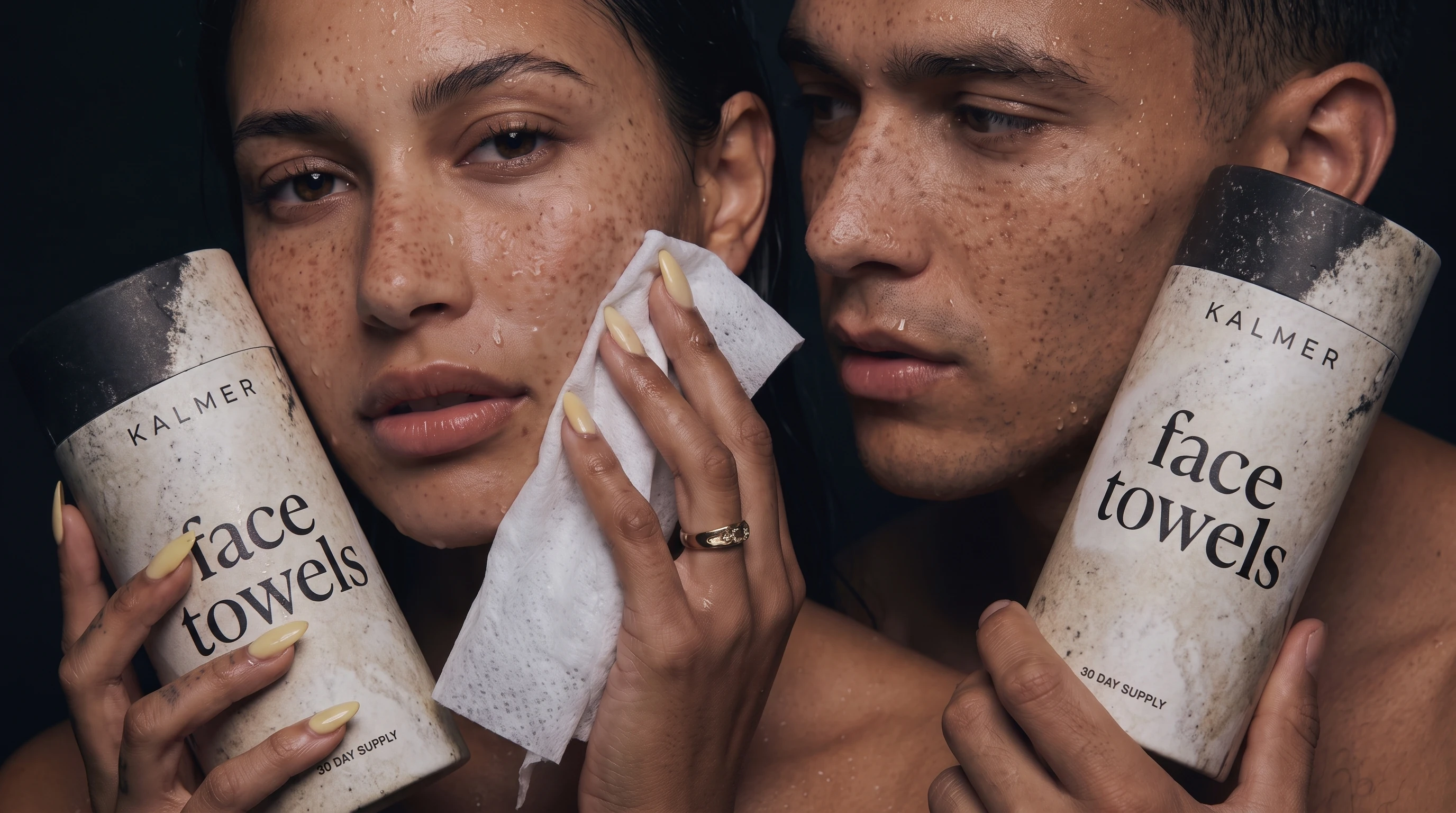
There is a hygiene angle that applies to fungal acne specifically, and it is worth stating carefully so it is not mistaken for a cure. The yeast favors warm, damp conditions, so dermatologists point to keeping skin cool and dry and not letting damp fabric sit against it. That is about removing the conditions the yeast likes, not treating the infection. A clean, dry drying surface is one small way to keep a damp cloth off your face, which is why KALMER makes a single-use towel: dry every time, never the damp one on the hook. It will not clear fungal acne, and nothing you dry with will. It simply removes one damp variable from the picture.
One less damp variable
Fungal acne favors warm, damp conditions, so dermatologists point to keeping skin dry. KALMER is a single-use face towel: dry and clean every time, so the towel meeting your skin is never the damp one on the hook. Not a treatment, just one variable off the table.
Shop KALMERHow to tell them apart, step by step
Work through four checks before deciding. First, itch: do the bumps itch, particularly after sweating? Itch leans fungal. Second, uniformity: in good light, are they all the same size and clustered, or do sizes vary with some turning into whiteheads? Uniform leans fungal, varied leans comedonal. Third, location: forehead, chest, back, and shoulders lean fungal, while the T-zone and jawline lean comedonal. Fourth, history: did the breakout follow sweating, humidity, or a course of antibiotics, or did it follow a new product, makeup, or a hormonal shift? The first pattern leans fungal, the second comedonal.
No single check is definitive, and the two can coexist, which is the honest limit of self-diagnosis. If one part of your face responds to your routine and another stubbornly does not, you may have both at once. That mixed picture is common and is a good reason to get a professional read rather than keep experimenting.
The last step matters
Calm starts with a clean surface.
Shop face towelsWhat to do next
If you suspect closed comedones, a gentle, consistent routine with salicylic acid or a retinoid and non-comedogenic products is the standard path, with patience measured in weeks. If you suspect fungal acne, the move is different: see a dermatologist for an antifungal, and in the meantime avoid heavy occlusive products and keep skin cool and dry. You can read the full picture on the yeast side in our guide to fungal acne.
Across both, the hygiene basics do no harm and help remove avoidable variables. Keeping skin clean, avoiding prolonged contact with damp fabric, and building a simple skincare routine you can actually keep are worth doing regardless of which condition you have. None of that substitutes for the right treatment, but it clears away the noise so the treatment can work.
It also helps to resist the urge to attack the bumps aggressively while you work out which they are. Picking, scrubbing, and stacking strong actives can irritate skin and, in the case of a fungal flare, the heavier occlusive products can make it worse. Gentle and consistent beats aggressive and frustrated here, especially when you are not yet sure what you are treating. If you are unsure, the safest holding pattern is a simple routine, no picking, and an appointment. KALMER fits that holding pattern as the drying step: a clean, dry, single-use surface, so at least the towel is not adding a variable while you sort out the rest.
A short note on timelines, because impatience is what drives most wrong turns here. Fungal acne, once the right antifungal is started, often improves within days to a couple of weeks, which is part of how dermatologists confirm the diagnosis in the first place. Closed comedones are slower: even with the right ingredients, they can take several weeks to clear, because you are waiting on the pore to normalize rather than clearing an infection. So a fast response to antifungal treatment leans fungal, and a slow, gradual improvement with salicylic acid or a retinoid leans comedonal. Knowing the expected pace keeps you from abandoning a treatment that is actually working, which is its own common mistake.
When to see a dermatologist
The last step matters
Calm starts with a clean surface.
Shop face towelsSee a board-certified dermatologist if you cannot tell which condition you have, if breakouts persist despite a reasonable routine, if bumps are itchy and unresponsive to acne products, or if you suspect you have both at once. A dermatologist can confirm fungal acne with a quick test and prescribe the right antifungal, and can point comedonal acne toward the ingredients that actually clear it. Given that the two need opposite treatments, a correct diagnosis is the single most valuable step, and it saves the weeks that guessing wrong would cost.
Fungal acne and closed comedones look alike but are different problems needing opposite treatments. The fast tells are itch and uniformity: fungal acne usually itches and comes in uniform, clustered bumps, while closed comedones do not itch and vary in size. Because they can look identical and even coexist, a dermatologist is the reliable way to know for sure, and getting it right is what saves you weeks of treating the wrong thing.
Frequently asked questions
How do I know if I have fungal acne or closed comedones?
+
Check for itch and uniformity. Fungal acne tends to be itchy and made of bumps that are all the same size, often on the forehead, chest, and back. Closed comedones are usually not itchy, vary in size, and cluster in the T-zone. A dermatologist can confirm which it is.
Can fungal acne turn into closed comedones?
+
They are separate conditions with different causes, but they can look alike and coexist on the same skin, and fungal bumps can develop small whiteheads. That overlap is exactly why they get confused, and why matching the treatment to the real cause matters.
What clears closed comedones?
+
Closed comedones respond to ingredients that clear and prevent clogged pores, such as salicylic acid and retinoids, plus non-comedogenic products and gentle consistency. They take time, often weeks, and do not respond to antifungal treatment because the cause is clogged pores, not yeast.
Why does telling them apart matter?
+
Because the treatments are opposite. Antifungals clear fungal acne but do nothing for clogged pores, and pore-clearing acne products do nothing for yeast and can even feed it. Treating the wrong one wastes weeks and can make the real problem worse.