The single-use makeup remover cloth, explained
Somewhere between the makeup wipe you know is bad for you and the reusable cloth you keep forgetting to wash sits a simple question: what should you actually be taking your makeup off with? The makeup remover cloth is the answer most dermatologists point to, but the category is muddier than it looks, especially once you compare reusable and single-use versions. Here is what a makeup remover cloth is, how the two types differ, and how to use either without irritating your skin.
The short version: the cloth matters less than how you use it, and hygiene is the deciding factor between the two types. But the details are worth getting right, because your face is not the place to be careless.
What a makeup remover cloth actually is
A makeup remover cloth is a soft cloth used with water or a cleanser to lift makeup off your skin. That last part matters, because it separates the cloth from two things it often gets confused with. It is not a makeup wipe, which comes pre-soaked in solution and, as many dermatologists point out, tends to move makeup around your face rather than actually remove it. And it is not a cotton round, which is smaller and made to be paired with a liquid remover.
The cloth sits in the middle: reusable or single-use, used with warm water or your own cleanser, doing the physical lifting while the product or water does the dissolving. Used that way it is genuinely effective and gentler than dragging a soaked wipe across your face. Used wrong, by scrubbing dry or relying on friction to do a solvent's job, it becomes just another way to irritate your skin.
The reason wipes fall short is worth understanding, because they are the default a lot of people are trying to replace. A pre-soaked wipe carries a fixed amount of solution and a lot of ingredients designed to keep that solution stable on a shelf for months, and it is meant to be used without rinsing. So it dissolves some makeup, spreads the rest around with the leftover residue, and leaves that residue sitting on your skin. A cloth used with your own cleanser and a rinse avoids both problems: you control the solvent, and you wash it away.
| Makeup remover cloth | Makeup wipe | Cotton round | |
|---|---|---|---|
| Used with | Water or your cleanser | Pre-soaked, no extra product | A liquid remover |
| Cleansing | Lifts and removes | Mostly smears around | Removes with the liquid |
| Waste | Reusable or single-use | Single use, high waste | Single use |
| Best for | Most people, done gently | Convenience in a pinch | Targeted or eye makeup |
Reusable vs single-use: the hygiene split
The main difference between reusable and single-use cloths is upkeep, and upkeep is really a hygiene question. A reusable cloth is cheaper and lower waste, but it comes into contact with makeup, oil, and bacteria over and over, and if it is not cleaned properly it can harbor microbes that lead to irritation or breakouts.
Dermatologists are specific about the care a reusable cloth needs: rinse it right after use, wash it promptly rather than letting it sit damp, and never leave it balled up in a humid bathroom where mold and mildew grow. The underlying issue is the same one that affects any reused textile against your face. In a six-month study of towels in daily use, biofilm formed within the fabric over time, a reminder that damp, reused fabric is a hospitable place for bacteria.
"Reusable cloths repeatedly contact skin, oils, and bacteria, so dermatologists advise rinsing after each use and washing promptly rather than letting the cloth sit damp between uses."Source: Dermatologist guidance on reusable makeup cloth hygiene, via Yoga Journal
Single-use cloths remove that entire problem by being clean every time. There is no cloth to rinse, wash, and dry before it turns into a liability, which is why they suit sensitive or acne-prone skin and travel especially well. The trade-off is the familiar one for anything single-use: ongoing cost and waste, softened but not erased by biodegradable cotton or plant fibers. If you want the fuller version of that trade-off, we laid it out in our guide to disposable face towels.
A clean cloth, every removal
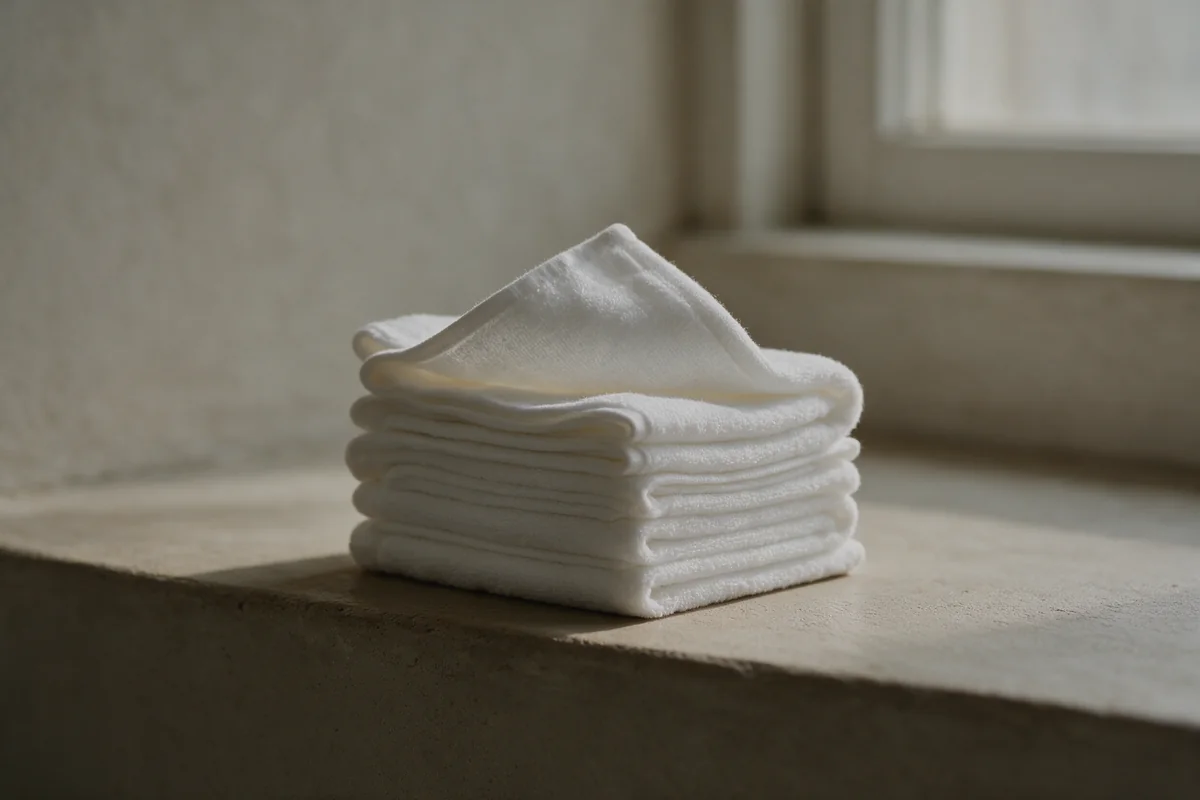
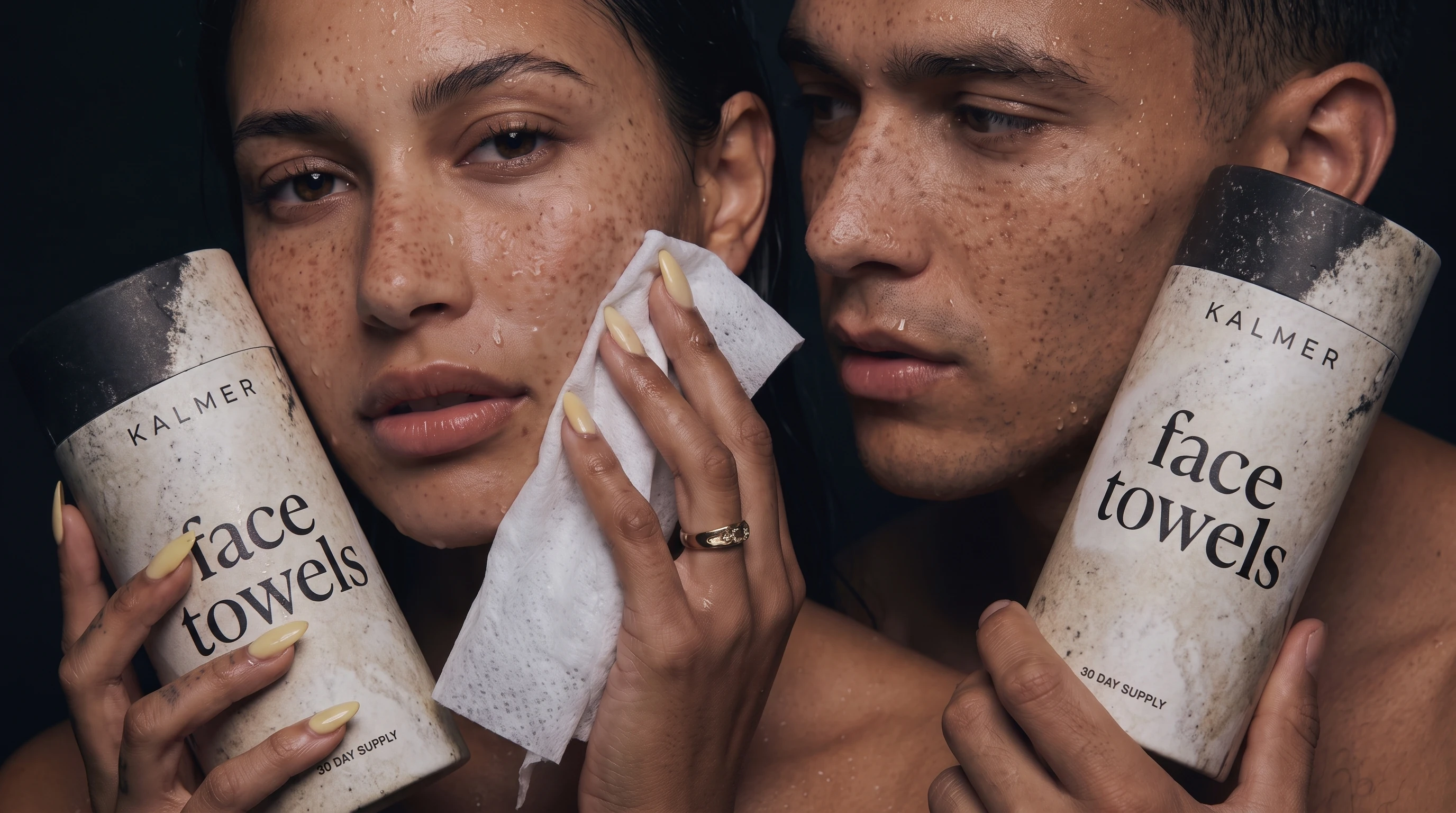
KALMER is a soft, single-use cotton face towel. Pair it with your cleanser or micellar water and you get a clean surface for every makeup removal, no reused, damp cloth collecting residue between uses.
Shop KALMERThe sensitive-skin catch: material and friction
For sensitive skin, the cloth's material and how hard you press matter more than which brand you buy. This is where a lot of makeup remover cloths quietly go wrong. Microfiber, the material in many popular remover cloths, is soft and gentle when new, but dermatologist commentary on the material notes it gets coarser with repeated use and can become more exfoliating and irritating over time, a real concern for sensitive, rosacea-prone, or eczema-prone skin.
The friction problem compounds when a cloth is expected to remove makeup with water alone. Water does not dissolve waterproof mascara or long-wear foundation, so people end up rubbing harder to compensate, and rubbing is the thing that damages skin. As dermatologists commonly advise, the most important part of using any cleansing cloth is a gentle hand, since rubbing too hard risks inflammation or micro-tears that compromise the skin barrier. The fix is to let the product do the dissolving: apply your cleanser, balm, or micellar water first, give it a moment to break the makeup down, then use the cloth to lift it away with a light touch rather than a scrub. Soft cotton, used gently, with a remover doing the chemical work, is the combination that respects sensitive skin.
The instinct to prove your face is clean by scrubbing until it feels squeaky is the enemy here. Makeup removal is not a test of effort. If you need to press hard, the problem is that your remover has not dissolved the makeup yet, not that you are being too gentle. Reach for more product or a better solvent, never more friction. Your skin barrier is doing the paying when you get this wrong, and a compromised barrier shows up as exactly the sensitivity that sends people looking for gentler products in the first place.
How to remove makeup without wrecking your skin
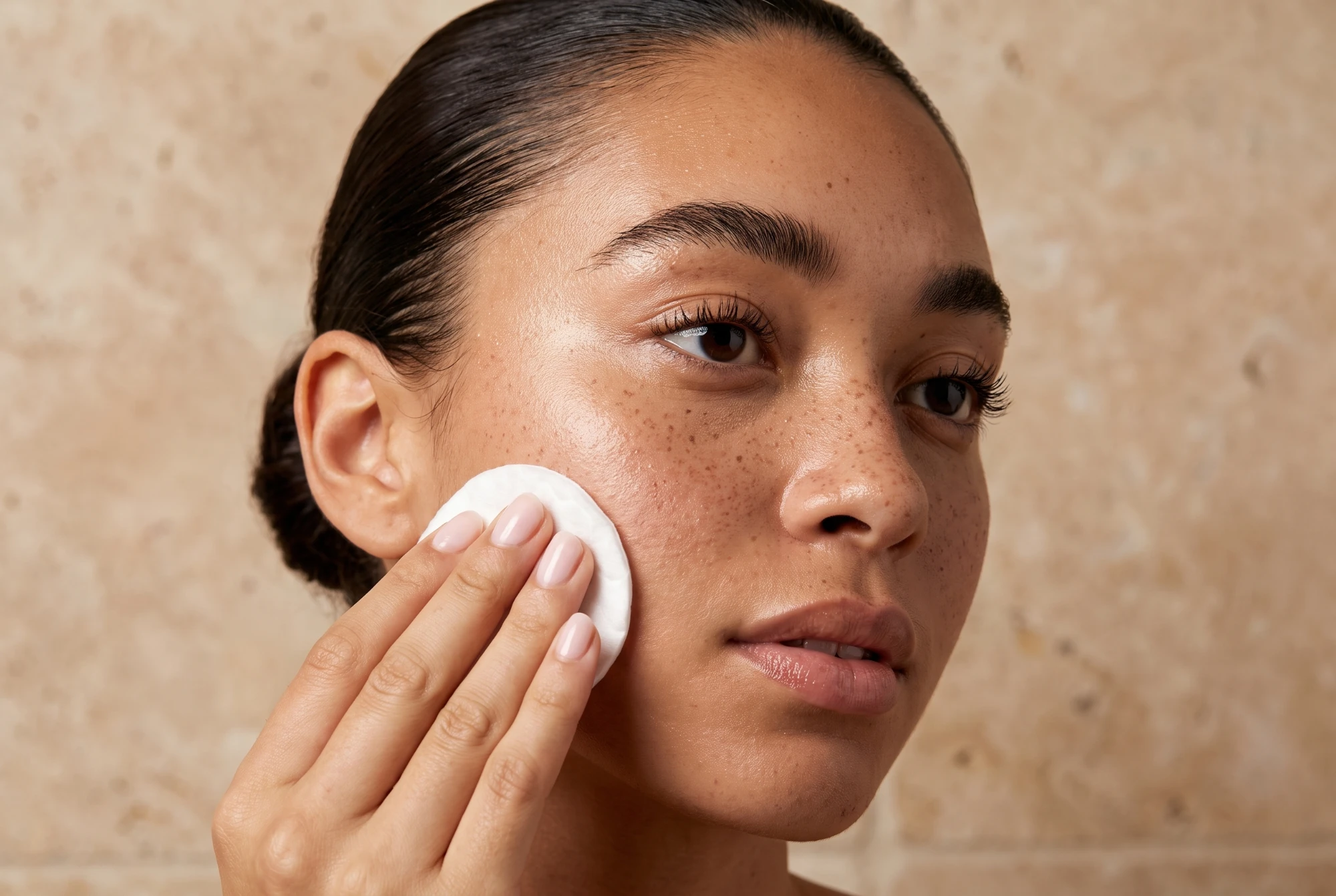
Dissolve first, lift second, and keep the surface clean. The method that works for almost everyone: apply a cleanser, cleansing balm, or micellar water and let it sit for a few seconds to break the makeup down. Then use a soft cloth to gently lift it away, pressing and rolling rather than dragging. Use a fresh area of the cloth as you go so you are not moving the same makeup around. Follow with a full cleanse if you double cleanse, and finish with moisturizer.
If you use a reusable cloth, keep a rotation so a genuinely clean one is always available, and launder them often in hot water. A single cloth washed once a week is the failure mode; a small stack used one-and-done between washes is what actually keeps them clean. If you use single-use, keep the unused ones sealed and dry so they stay clean until you reach for them, since an open stack on a humid counter defeats the reason you bought single-use in the first place. Either way, the cloth is a tool for lifting, not a solvent and not a scrubber. KALMER fits this as a soft, single-use cotton surface you pair with your remover: clean every time, gentle by material, and never the reused damp cloth that undoes the point.
There is a quiet cost to getting makeup removal wrong that is worth naming, because it is where a lot of sensitivity begins. The face takes more mechanical abuse during makeup removal than at almost any other point in the day: this is the step where people rub, drag, and press hardest, usually late at night when they are tired and want it over with. Doing that with a rough cloth and not enough solvent, night after night, is a slow way to wear down a healthy barrier into a reactive one. Treating the step as gently as you treat the rest of your routine is not fussiness, it is barrier maintenance.
When to see a dermatologist
Makeup removal is maintenance, not treatment, so watch for signs the issue runs deeper. See a board-certified dermatologist if your skin is persistently red, stinging, or breaking out despite a gentle routine, if you have a known condition like rosacea or eczema that is worsening, or if removing makeup consistently leaves your skin irritated no matter how careful you are. Sometimes the trigger is a product rather than a technique, and a dermatologist can help you find it faster than trial and error will.
Key takeaways
A makeup remover cloth is a soft cloth used with water or a cleanser to lift makeup, and it beats wipes, which mostly smear. The reusable versus single-use choice comes down to hygiene and upkeep: reusable is cheaper and lower waste but must be washed promptly and dried fully, while single-use is clean every time with no maintenance, which suits sensitive skin and travel. Whatever you choose, the cloth matters less than your hand: let a remover dissolve the makeup, then lift gently with a soft cloth rather than scrubbing, and be wary of rough microfiber on reactive skin. Gentle and clean beats thorough and harsh, every time.
For a soft, single-use surface that stays clean between removals, KALMER is a cotton face towel you can pair with whatever remover you already trust.
Frequently asked questions
What is a makeup remover cloth?
+
A makeup remover cloth is a soft textile you use with warm water or a cleanser to lift makeup, oil, and grime from your skin. It is different from a makeup wipe, which is pre-soaked and tends to smear product around rather than fully cleanse, and different from a cotton round, which is smaller and usually paired with a liquid remover.
Are reusable or single-use makeup remover cloths better?
+
It depends on your priorities. Reusable cloths are cheaper and lower waste but only stay hygienic if you wash them promptly and dry them fully, since a damp reused cloth grows bacteria. Single-use cloths are clean every time with no upkeep, which suits sensitive or acne-prone skin and travel, at the cost of ongoing purchase and waste.
Do makeup remover cloths work without any product?
+
Partly. A damp cloth lifts light makeup and grime on its own, but heavier or waterproof makeup usually needs a cleanser, oil, or micellar water to dissolve it first. Relying on water and friction alone tends to mean rubbing harder, which is exactly what sensitive skin does not want.
Are makeup remover cloths bad for sensitive skin?
+
Some can be. Rough microfiber cloths get coarser with reuse and can irritate sensitive, rosacea-prone, or eczema-prone skin. A soft cotton cloth used gently, with a remover to do the dissolving, is kinder. The key is letting the product lift the makeup so you are not scrubbing.
Sources
- Yoga Journal, Do Reusable Makeup Remover Cloths Actually Work? A Dermatologist Weighs In
- Reviewed, Makeup Eraser review (commentary from Dr. Suzanne Friedler, board-certified dermatologist)
- American Academy of Dermatology, Face washing 101
- Nagai K, et al. (2023). Analysis of biofilm and bacterial communities in the towel environment with daily use. Scientific Reports.