Acne mechanica: when friction causes breakouts

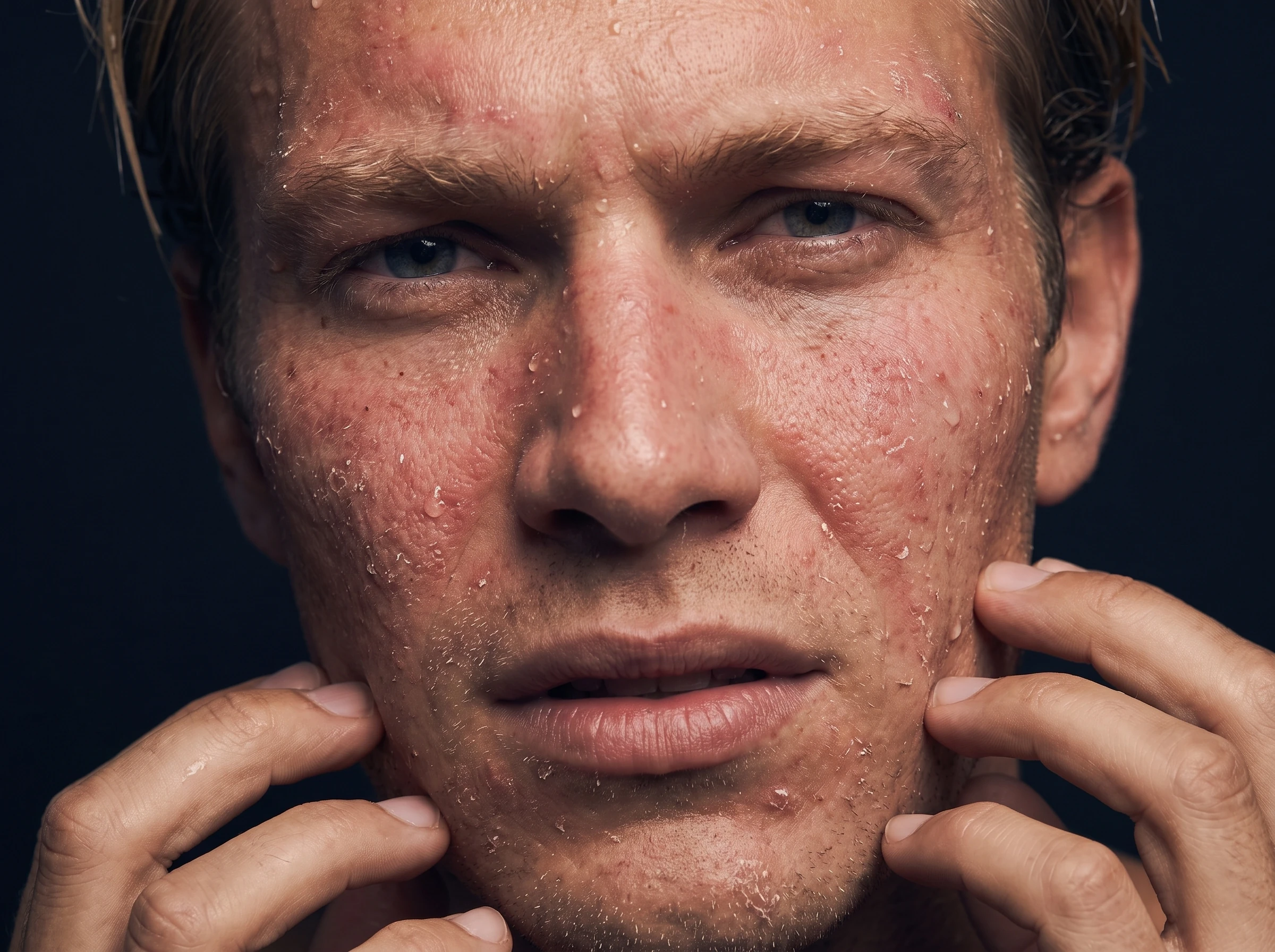
Some breakouts do not follow the usual rules, and once you notice it, you cannot unsee the pattern. They show up in a precise line along your jaw where a mask sits, or across your forehead where a hat band rests, or only on the cheek you hold your phone against. That specificity is the signature of acne mechanica, and it matters because this kind of acne ignores the products aimed at hormonal or oily-skin breakouts. Acne mechanica is caused by friction, not by what is happening inside your body, and once you see the pattern, the fix becomes obvious.
Here is what acne mechanica is, how to recognize it by where it appears, and why the most effective treatment is often not a product at all.
What is acne mechanica?
Acne mechanica is acne caused by physical stress on the skin, friction, pressure, heat, and occlusion, rather than by internal factors like hormones. When something repeatedly rubs, presses, or traps heat and sweat against your skin, it disrupts the surface and clogs pores with the sebum, sweat, and bacteria that get trapped there, producing breakouts in the affected area.
This is a genuinely different mechanism from ordinary acne. Acne vulgaris, the common kind, is driven largely by hormones, oil production, and genetics, working from the inside out. Acne mechanica works from the outside in: the trigger is mechanical, something in physical contact with your skin, which means the acne appears exactly where that contact happens. It can occur on its own or on top of existing acne, and it can produce the full range of lesions, from blackheads and whiteheads to inflamed pimples. Because the driver is external, acne mechanica is often called one of the most preventable forms of acne, since removing the trigger usually removes the problem.
"A 2022 meta-analysis of nearly 30,000 people found a 55% overall rate of mask-induced facial skin problems, with prolonged wear beyond about 4 to 6 hours a day as the biggest risk factor."Source: Maskne meta-analysis, 2022, Indian Journal of Dermatology, via review reporting
How to spot it: follow the pattern
The giveaway of acne mechanica is location: it appears precisely where something rubs or presses. This is the single most useful diagnostic clue, and it is one you can read yourself. If your breakouts map to a piece of gear or a habit, friction is the likely cause.
The common culprits and their signatures: masks cause breakouts around the cheeks, jaw, and mouth, the pattern nicknamed maskne. Hats and helmets cause them on the forehead, temples, and hairline. Straps, collars, and chin guards cause them on the neck, shoulders, and jaw. Tight clothing and sports gear cause them on the back, chest, and shoulders. A phone held to one cheek causes an asymmetric flare on that side. Even a bag strap or resting your chin in your hand can do it. If your acne is concentrated in one of these contact zones rather than spread across the usual oily areas, acne mechanica moves to the top of the list. It overlaps heavily with the friction issues behind gym and post-workout breakouts and with what touches your face day to day.
| Acne mechanica | Regular acne (vulgaris) | |
|---|---|---|
| Cause | Friction, pressure, heat, occlusion | Hormones, oil, genetics |
| Direction | Outside in | Inside out |
| Location | Exactly where something rubs | Typical oily zones, T-zone |
| Biggest clue | Maps to gear or a habit | Spread across usual areas |
| Main fix | Remove the friction source | Actives, sometimes prescription |
Why treatment fails if you ignore the friction
Because the cause is mechanical, the most important fix is mechanical, and topical products alone often fail. This is where people get stuck: they attack acne mechanica with the same serums they would use on hormonal acne, see little improvement, and escalate to stronger products, when the actual problem is the thing still rubbing their skin twice a day.
Standard acne ingredients do help. Salicylic acid, benzoyl peroxide, and retinoids can reduce the inflammation and clear the clogged pores, and for cases where you cannot remove the trigger, like required sports gear or a work mask, they are a reasonable way to manage it. But dermatologists are consistent that treatment fails if you do not address the friction feeding the breakouts. If you keep wearing the tight strap, holding the dirty phone, or drying your face by scrubbing with a rough towel, the mechanical stress keeps regenerating the acne faster than the actives can clear it. That is also why acne mechanica so often overlaps with breakouts blamed on other things, including whether a dirty towel causes acne, where friction, not bacteria, turned out to be the real concern. The order of operations is: reduce the friction first, then treat what remains.
Reduce the friction you can control
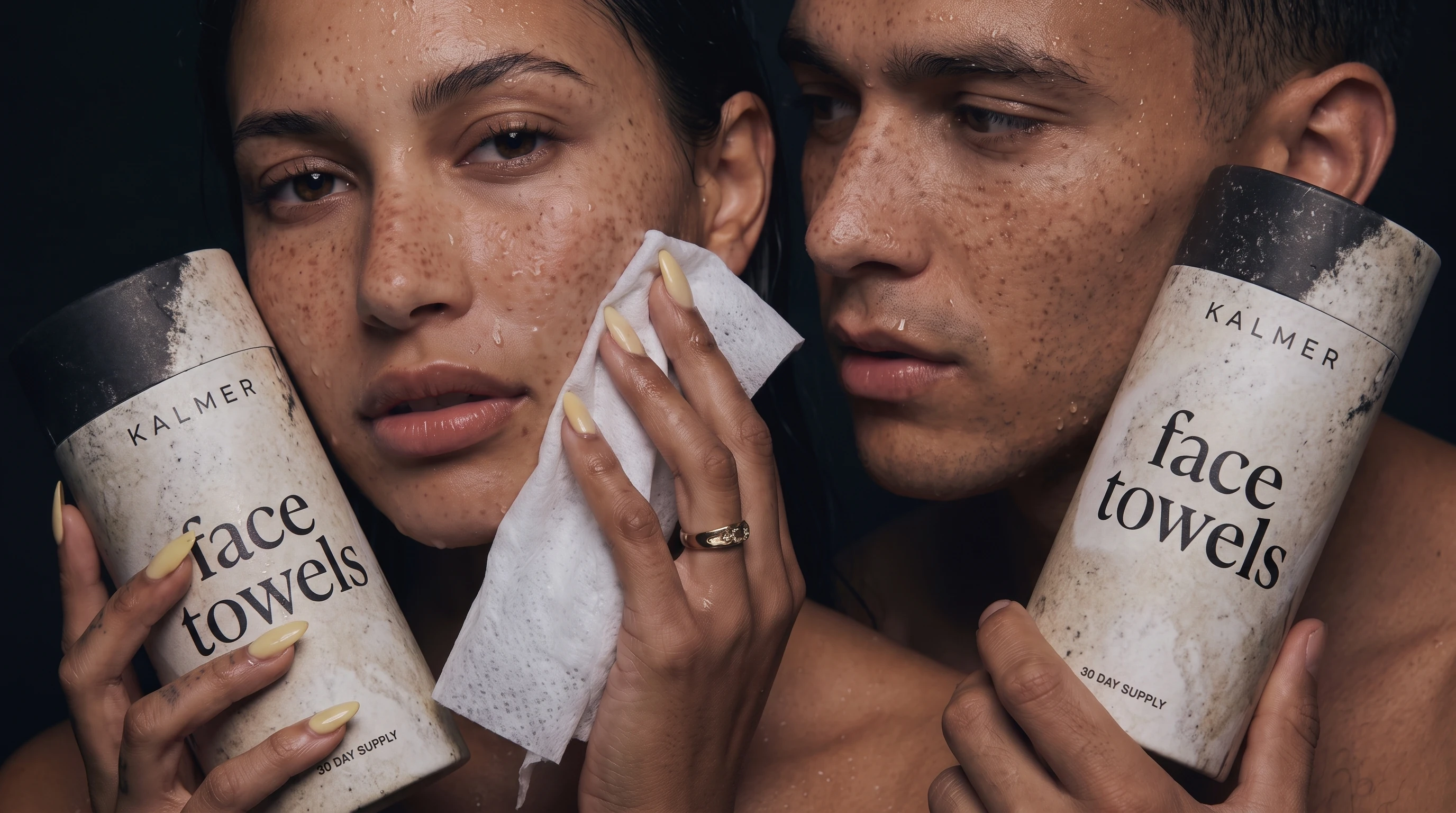
Acne mechanica is a friction problem, and the towel you dry with is a daily friction source most people never consider. KALMER is a soft, single-use face towel: gentle to pat with and clean every time, so drying is one less thing rubbing your skin.
Shop KALMERHow to prevent acne mechanica
Prevention is mostly about reducing friction, heat, and moisture where they build up. The practical steps, drawn from dermatologist guidance: take breaks from gear when you can, removing helmets, pads, or masks periodically to let skin breathe. Wear loose, breathable, moisture-wicking fabrics rather than tight synthetic ones that trap heat and sweat. Keep anything that touches your face clean, since a dirty mask, a sweaty hat, or a grimy phone adds bacteria and grime to the friction. Cleanse gently after sweating, without scrubbing, because harsh washing adds its own friction to skin already under mechanical stress. And support the skin barrier with a non-comedogenic moisturizer, since friction and heat damage the barrier and a stronger barrier tolerates the stress better.
The theme running through all of it is to lower the total friction load on your skin, and that includes the sources people never think of. The towel you dry with twice a day is one of them: a rough, worn, or reused towel is a small, repeated friction source pressed to freshly cleansed skin, and swapping to a soft one you pat with rather than rub removes a stressor you did not know you had. It will not treat acne mechanica any more than any single change will, but it subtracts one more source of the friction that feeds it. KALMER is built for exactly that gentle, clean drying.
Acne mechanica is unusually satisfying to fix because the cause is so findable. Most acne makes you guess at hormones, diet, and genetics you cannot see. This kind leaves a map: the breakouts trace the outline of whatever is rubbing them. So if you have acne in a suspiciously neat pattern, treat the pattern as evidence and audit what touches that spot, your mask, your phone, your pillow, your chin strap, your hand. The answer is usually sitting right on the outline of the problem, waiting for you to connect the shape of the breakout to the thing that made it.
Maskne, and why it taught everyone this
Maskne deserves its own mention, because it turned acne mechanica from an athletes' footnote into something almost everyone experienced. When mask-wearing became widespread, huge numbers of people developed breakouts around the cheeks, jaw, and mouth for the first time, in the exact pattern the mask covered. Studies during that period found that a majority of regular mask-wearers reported facial skin problems, and prolonged wear was the biggest risk factor. The lesson was bigger than masks: it was a mass demonstration that friction, heat, and occlusion alone can produce acne in people with no history of it. If you understood why your mask broke you out, you understand acne mechanica, and you can apply the same logic to every other thing that presses on your skin all day.
When to see a dermatologist
Most acne mechanica clears once the friction is addressed, but not all of it. See a board-certified dermatologist if your breakouts last more than about two months despite reducing friction and using over-the-counter care, if they become painful, deep, or start scarring, or if you cannot remove the trigger, like required protective gear, and need a prescription-strength plan. A dermatologist can also confirm whether friction is truly the cause or whether hormonal acne is running underneath it, since the two can occur together.
Key takeaways
Acne mechanica is acne caused by friction, pressure, heat, and occlusion rather than hormones, and its signature is location: it appears exactly where something rubs or presses, from mask lines to strap paths to your phone-holding cheek. Because the cause is mechanical, the most important fix is mechanical, reduce the friction, heat, and moisture at the source, and while standard acne ingredients help, they fail if the rubbing continues. Audit everything that touches the affected area, take breaks from gear, keep contact surfaces clean, and cleanse gently. Find what is rubbing, and you have usually found the cure.
The reason acne mechanica is worth knowing about even if you do not have it right now is that it reframes how you think about acne generally. It proves that not all breakouts come from within, that some are simply your skin responding to being rubbed, and that the solution is sometimes environmental rather than pharmaceutical. That mental shift, checking what touches your skin before reaching for another product, is useful far beyond acne mechanica itself. Sometimes the answer really is as simple as changing what presses on your face.
For one friction source most people overlook, KALMER is a soft, single-use face towel: gentle to pat with and clean every time, so the drying step is not part of the problem.
Frequently asked questions
What is acne mechanica?
+
Acne mechanica is a type of acne caused by friction, pressure, heat, and occlusion on the skin, rather than by internal factors like hormones. The physical stress traps sebum, sweat, and bacteria in the pores, leading to breakouts in the exact areas where something rubs or presses, such as under a mask, helmet, strap, or a phone held to the cheek.
How is acne mechanica different from regular acne?
+
Regular acne, or acne vulgaris, is driven largely by internal factors like hormones, oil, and genetics and appears in typical areas like the T-zone. Acne mechanica is driven by external physical stress and appears exactly where friction or pressure occurs. The location pattern is the biggest clue: acne that maps to mask lines, strap paths, or your phone side points to acne mechanica.
How do you get rid of acne mechanica?
+
Reduce the friction, pressure, and heat at the source, since that is usually enough on its own. Take breaks from gear, wear looser breathable fabrics, keep anything that touches your face clean, and cleanse gently after sweating. Standard acne ingredients like salicylic acid or benzoyl peroxide help, but they will keep losing if you do not address the rubbing feeding the breakouts.
Is maskne the same as acne mechanica?
+
Yes. Maskne is acne mechanica caused specifically by mask-wearing, through the heat, friction, and occlusion a mask creates around the cheeks, jaw, and mouth. It became common during widespread mask use, but the underlying mechanism is the same friction-and-occlusion process behind all acne mechanica.
Sources
- American Academy of Dermatology and Journal of the American Academy of Dermatology (2021). Diagnostic and management considerations for maskne.
- Ro / dermatology. Acne mechanica: causes, symptoms, treatment.
- Lee S, MD (Dr. Pimple Popper), SLMD Skincare. Acne mechanica: causes, prevention, treatment.
- Maskne meta-analysis (2022), Indian Journal of Dermatology, via review reporting 55% overall rate of mask-induced facial skin problems.