Hard water and your skin: does it really matter?
You have done everything right. Gentle cleanser, fragrance-free everything, a good moisturizer, and your skin still feels tight after every wash and flares without warning. Before you buy another product, it is worth asking a question most people never consider: what is in the water you are washing with? Hard water and your skin have a real, if often overstated, relationship, and understanding it can save you from blaming a routine that was never the problem.
Here is the honest version, neither the "hard water is ruining your skin" panic that sells water softeners nor the dismissal that it never matters. The truth sits in between, and it depends a lot on your skin.
Does hard water affect your skin?
Hard water can worsen dryness and irritation, but it does not cause skin conditions on its own. This distinction matters, because the internet tends to collapse it. Hard water is water with a high mineral content, mainly calcium and magnesium, and an estimated majority of US homes have it. Those minerals do interact with your skin, but "interact with" is not the same as "cause disease."
What the evidence actually shows is an association and a plausible mechanism, not a direct cause. Research has found that people with eczema who live in hard water areas often report more flare-ups, and that hard water is associated with a higher prevalence of eczema, especially in children. But the certainty of that observational evidence is low, and hard water does not give healthy skin a disease. The accurate summary: hard water can contribute to dryness and irritation in some people, particularly when it interacts with cleansers, and it can worsen existing conditions, but it does not cause dry skin in everyone.
"Sites washed with hard water showed significantly increased surfactant deposits, which raised water loss through the skin and caused more irritation, particularly in people with a genetic tendency toward barrier impairment."Source: Danby et al., Journal of Investigative Dermatology, 2018
The mechanism: minerals plus soap residue
The problem is not the minerals alone, it is what they do with your cleanser. When hard water's calcium and magnesium meet soap, they react to form a residue, a kind of film that does not rinse away cleanly. That film sits on your skin, and it is the main way hard water causes trouble.
Two things follow from it. First, the residue itself can irritate and disrupt the skin barrier, the stratum corneum that keeps moisture in and irritants out. A controlled study found that washing with hard water left more surfactant, the active cleansing agent in soap, deposited on the skin, with associated barrier stress. Second, hard water makes soaps lather poorly, so people instinctively use more cleanser, which leaves even more residue and compounds the effect. The result is the familiar tight, filmy, dry feeling after washing, and for sensitive skin, a barrier that is a little more stressed every day.
| Hard water | Soft water | |
|---|---|---|
| Mineral content | High calcium and magnesium | Low |
| Lather | Poor, tempts overuse of product | Easy |
| Residue on skin | Soap-mineral film | Rinses cleanly |
| Effect on barrier | Can stress and dry, especially sensitive skin | Gentler |
| Who notices most | Eczema, rosacea, reactive skin | Most tolerate either |
Who is actually affected
Hard water matters most for people whose skin barrier is already compromised, and much less for everyone else. This is the part that gets lost in the marketing. If you have resilient, non-reactive skin, you may wash in hard water your whole life and notice very little. If you have eczema, rosacea, or a damaged skin barrier, the same water can be a meaningful daily trigger.
The signs that hard water is affecting you: skin that feels tight or dry immediately after washing, irritation or redness that worsens after showering, products that will not lather so you keep using more, and a filmy feeling that does not rinse off. If dryness or eczema flares are not responding to your usual moisturizer, and especially if they improved when you traveled somewhere with different water, that is a strong hint. People with sensitive skin are the ones for whom addressing it is most worth the effort.
Gentle drying for stressed skin
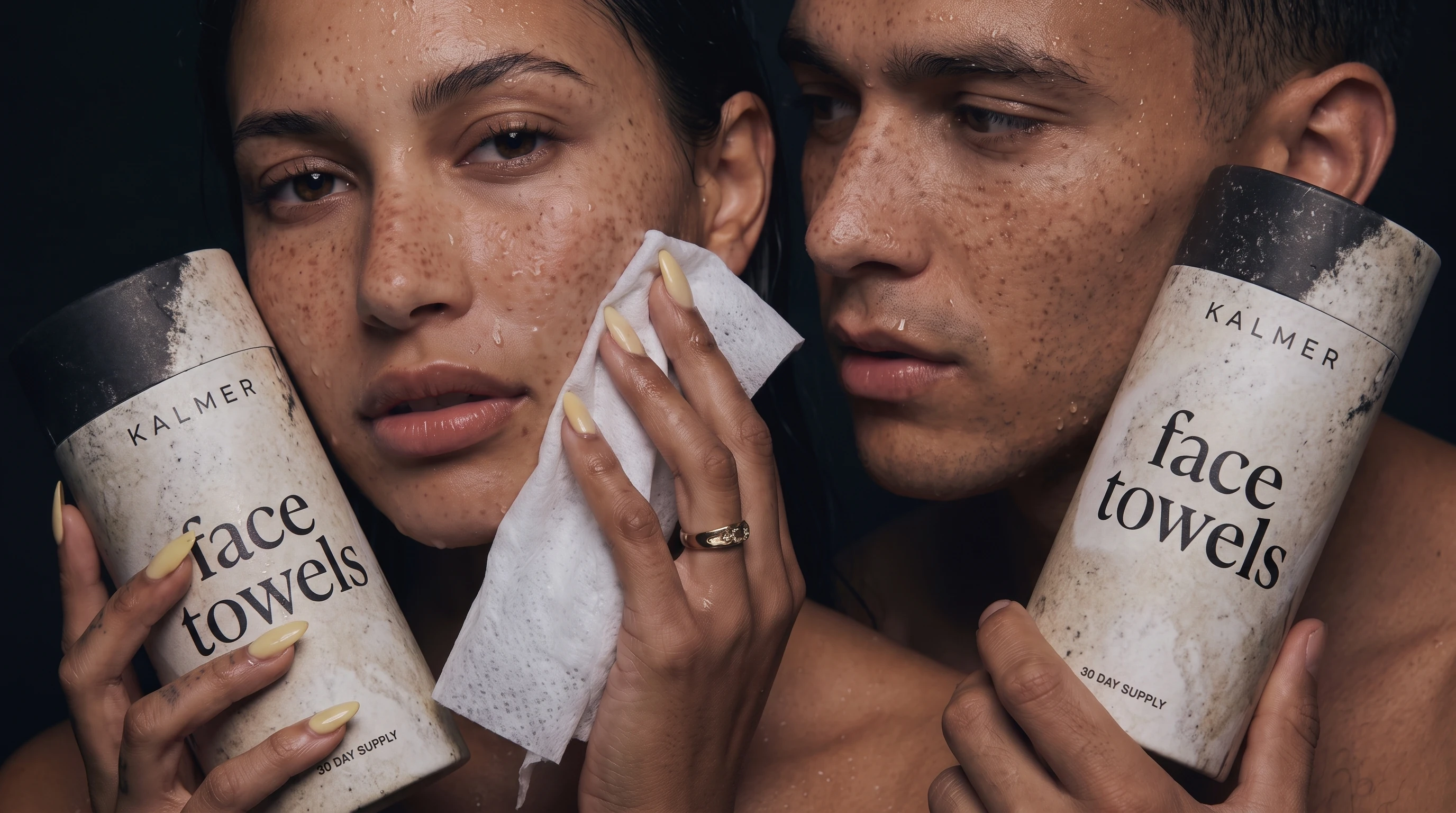
If hard water already leaves your skin tight, the last thing it needs is a stiff, mineral-crusted towel. KALMER is a soft, single-use cotton face towel: clean and gentle every time, so the drying step is not adding to the irritation.
Shop KALMERWhat to actually do
Start with the free and gentle fixes before spending money on hardware. Most of what helps is the same gentle approach that suits sensitive skin generally: use a mild, fragrance-free cleanser rather than a harsh foaming one, wash with lukewarm water instead of hot, rinse thoroughly so less residue is left behind, and moisturize while your skin is still slightly damp to rebuild the barrier the water stressed. Using less cleanser, not more, also helps, since less product means less residue for the minerals to react with. The gentle technique in our guide to how to wash your face applies doubly in a hard-water home: fingertips over tools, lukewarm not hot, and stopping before your skin feels stripped.
If the problem persists and you have confirmed hard water is the culprit, then hardware is worth considering: a shower filter reduces some minerals and chlorine, and a whole-home water softener removes the calcium and magnesium through ion exchange. Be aware of the honest caveat here: water softeners are sold heavily and framed as skincare miracles, but they are a home-plumbing solution, not a medical treatment, and the research on whether softening water improves eczema is mixed. They can reduce one environmental trigger. They are not a cure. Start with the gentle routine changes, which help most people, before the plumbing.
Hard water reaches your skin through more than the tap. It also stiffens your towels and leaves detergent residue in your laundry, so the fabric you press against your face after washing can carry the same mineral-soap film. If your towels have gone crunchy and your skin is reactive, that stiff texture is friction plus residue arriving together at the worst moment, right after cleansing. A soft, clean surface avoids adding to what the water already started. That is the honest, narrow role for a single-use towel here: KALMER will not change your water or treat anything, but it keeps the drying step from pressing a stiff, residue-crusted towel onto skin the minerals have already stressed.
Does hard water cause acne, or just dryness?
Worth separating these, because the two get lumped together. The well-supported effect of hard water is on dryness and barrier irritation, through the residue mechanism above. The link to acne is much weaker and mostly indirect: there is no strong evidence that hard water directly causes breakouts. Where it might play a small role is second-order, when the tight, filmy feeling prompts people to over-wash, scrub, or pile on more product, all of which can irritate acne-prone skin. So if you have both hard water and breakouts, treat the acne as acne, on its own terms, and treat the water as a possible dryness and irritation factor rather than the cause of your spots.
When to see a dermatologist
Water is an environmental trigger, not a diagnosis, so know when to escalate. See a board-certified dermatologist if you have persistent dryness, redness, or irritation that gentle changes do not resolve, if you have eczema, rosacea, or dermatitis that is flaring, or if your skin reacts no matter what you do. A dermatologist can confirm whether your water is a contributing factor or whether something else is driving the problem, and can prescribe real treatment for conditions that a water filter will only ever partly help.
One practical way to find out whether your water is really the issue: change one thing at a time, the same discipline that works for products. If you suspect hard water, try a gentler cleanser and a filtered final rinse for a few weeks before committing to a softener, and notice whether the after-wash tightness eases. If it does, you have your answer cheaply. If it does not, you have saved yourself the cost of plumbing that was never going to fix the real problem.
Key takeaways
Hard water and your skin have a real but modest relationship: it does not cause skin disease, but its calcium and magnesium react with cleanser to leave a residue that can disrupt the barrier and worsen dryness and irritation, especially for eczema-prone, rosacea-prone, or reactive skin. Resilient skin often notices little. The signs are tightness after washing, poor lather, and a film that will not rinse. Start with gentle fixes, a mild cleanser, lukewarm water, less product, prompt moisturizing, before spending on a filter or softener, and remember those are plumbing solutions, not cures.
And for the drying step on skin the water has already stressed, KALMER is a soft, single-use cotton towel: clean and gentle every time, so it is not adding friction and residue to the problem.
Frequently asked questions
Does hard water affect your skin?
+
It can, but it does not cause skin disease on its own. Hard water's calcium and magnesium react with soaps and cleansers to leave a residue that can disrupt the skin barrier, contributing to dryness and irritation. The effect is most noticeable in people with sensitive or eczema-prone skin, while resilient skin often notices little difference.
What are the signs hard water is affecting your skin?
+
Common signs include skin that feels tight or dry right after washing, increased irritation or redness, products not lathering well so you use more, and a filmy residue that does not rinse cleanly. Flare-ups of eczema or dryness that do not respond to moisturizer can also point to your water.
Does hard water cause acne?
+
There is no strong evidence that hard water directly causes acne. It may contribute indirectly by leaving residue and prompting people to over-wash or use more product, which can irritate skin. The clearer, better-supported effect of hard water is on dryness and barrier irritation rather than on acne.
How do you protect your skin from hard water?
+
Use a gentle, fragrance-free cleanser and lukewarm rather than hot water, rinse thoroughly, and moisturize while your skin is still slightly damp. For a persistent problem, a shower filter or a whole-home water softener reduces the minerals. These are practical steps, not medical treatments, so see a dermatologist if irritation persists.
Sources
- Danby SG, et al. (2018). The Effect of Water Hardness on Surfactant Deposition Following Washing and Subsequent Skin Irritation in Atopic Dermatitis Patients and Healthy Controls. Journal of Investigative Dermatology, 138(1):68-77.
- Healthline, Hard water and eczema
- American Academy of Dermatology, Dermatologists' top tips for relieving dry skin