Over-exfoliation: signs and how to recover
It usually starts with good intentions. You exfoliate, your skin looks smoother, so you do it more, and then somewhere along the way your skin turns on you: tight, red, stinging at products that used to be fine, and breaking out for no obvious reason. That is over-exfoliation, and it is one of the most common self-inflicted skin problems there is. The good news is that it is also one of the most fixable, because the cure is not a product. It is restraint and time.
Here is how to recognize over-exfoliation, what it is actually doing to your skin, and the step-by-step way back.
The signs of over-exfoliation
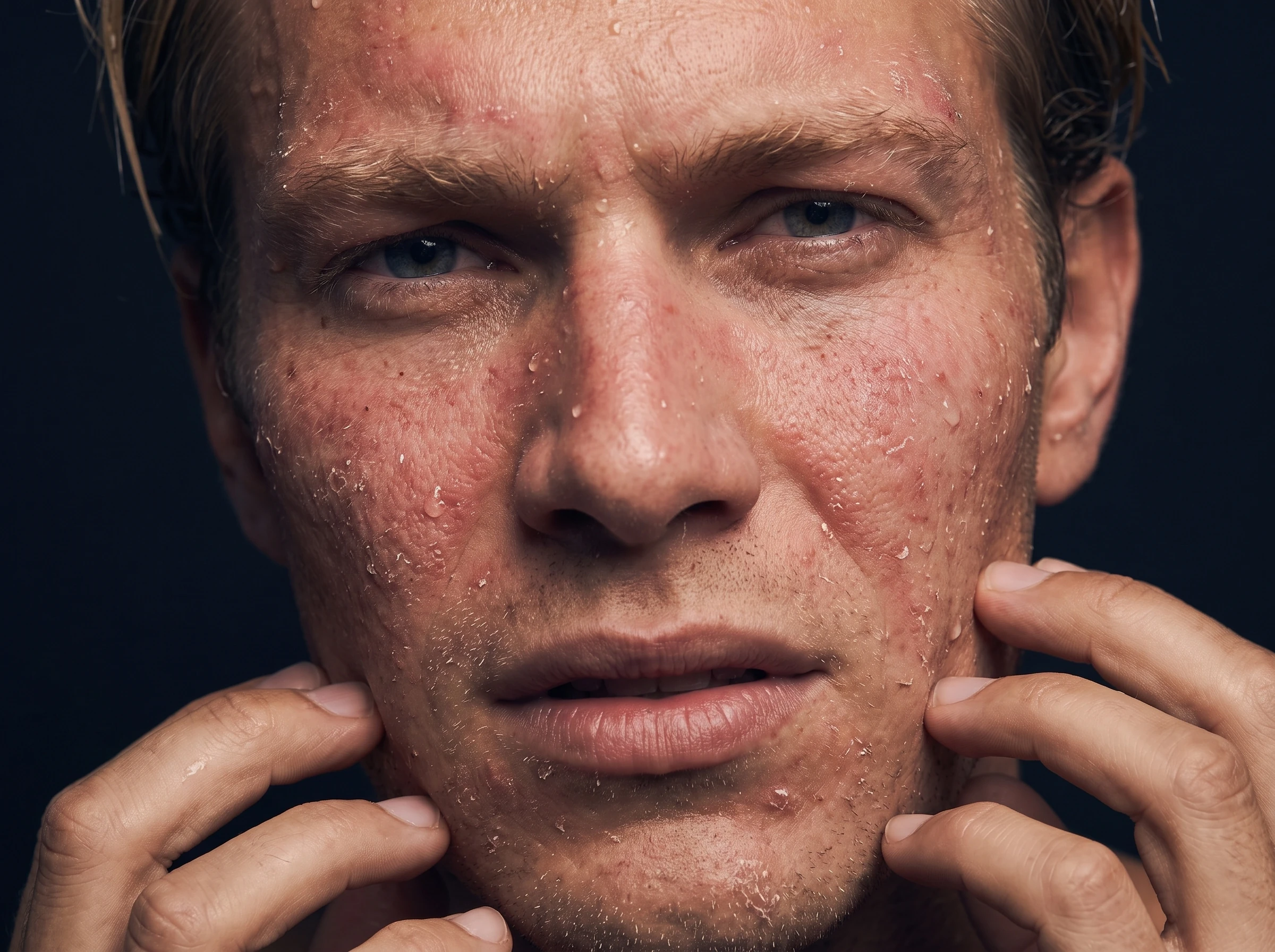
Over-exfoliated skin is red, tight, shiny, stinging, flaky, and often breaking out, and the giveaway is that these appeared after you exfoliated more. Any one of them alone could be something else, but together, and following a stretch of frequent scrubbing or strong acids, they point clearly at over-exfoliation.
Any single symptom could be something else, dry weather, a new product, a bad night's sleep, but the cluster arriving together after a stretch of heavy exfoliation is the pattern that names the cause. The most confusing sign is the shine. Freshly over-exfoliated skin can look smooth and even glossy at first, because you have stripped away the top layer, and people read this as success right up until the irritation catches up. Then come the others: tightness, a stinging or burning sensation when you apply products, heightened sensitivity to things that never bothered you, dry patches and flaking, and breakouts. The breakouts are the cruelest part, because they push people in exactly the wrong direction, toward more exfoliation to "clear" the skin, which deepens the damage.
| Sign | What it feels or looks like |
|---|---|
| Redness | Persistent flush, especially on cheeks |
| Tightness | Skin feels stretched after washing |
| Shine | Waxy or glassy look from a stripped surface |
| Stinging | Products that never stung now burn |
| Sensitivity | Reacts to things it used to tolerate |
| Flaking | Dry patches and peeling |
| Breakouts | New spots from barrier disruption |
What over-exfoliation actually does
Over-exfoliation damages the skin barrier faster than it can rebuild itself. This is the mechanism behind every symptom above, and understanding it makes the recovery obvious. Your outermost layer, the stratum corneum, is a barrier of cells held together by a matrix of lipids, and it does two jobs: keeping moisture in and keeping irritants and microbes out.
Exfoliation removes dead cells from this layer, which is fine in moderation because the barrier constantly renews, and a plain washcloth or a gentle acid clears buildup without harm at the right frequency, as covered in can you exfoliate with a washcloth. Over-exfoliation removes them faster than renewal can keep up, so the barrier thins and its structure breaks down. Now water escapes, leaving skin tight and flaky, and irritants and microbes get in more easily, causing redness, stinging, sensitivity, and inflammation-driven breakouts. In other words, over-exfoliation manufactures a damaged skin barrier, which is why the two conditions look identical and share a recovery. The skin is not dirty or in need of more cleaning; it is wounded and in need of being left alone.
"The skin barrier keeps moisture in and irritants out; when exfoliation removes cells faster than the barrier can rebuild, the result is dryness, sensitivity, and inflammation."Source: Del Rosso et al., Journal of Clinical and Aesthetic Dermatology, 2016
How to recover, step by step
Recovery is mostly subtraction: stop exfoliating, strip your routine back, and let time do the work. The instinct to fix irritated skin by adding soothing products is understandable and mostly counterproductive. What the barrier needs is fewer inputs, not more.
The steps, in order. First, stop all exfoliation immediately, both physical and chemical, and do not resume until your skin is fully calm. Second, pause other actives too: retinoids, vitamin C, benzoyl peroxide, and anything strong, since they add to the load on an already-stressed barrier. Third, cut your routine to three things: a gentle, fragrance-free cleanser, a simple barrier-supporting moisturizer with ingredients like ceramides, and sunscreen during the day. Fourth, be gentle in every physical way, lukewarm water, fingertips not tools, and a soft pat dry rather than rubbing, because friction on a compromised barrier is the last thing it needs. Fifth, wait. Most skin recovers within a few weeks on this stripped-back routine, and the single most common mistake in recovery is reintroducing actives too soon because the skin looked better for a day. A soft, single-use towel like KALMER helps here in one narrow way: it keeps the drying step frictionless and clean while the barrier is fragile, so you are not scraping a healing surface twice a day with a stiff, reused towel.
Nothing rough while it heals
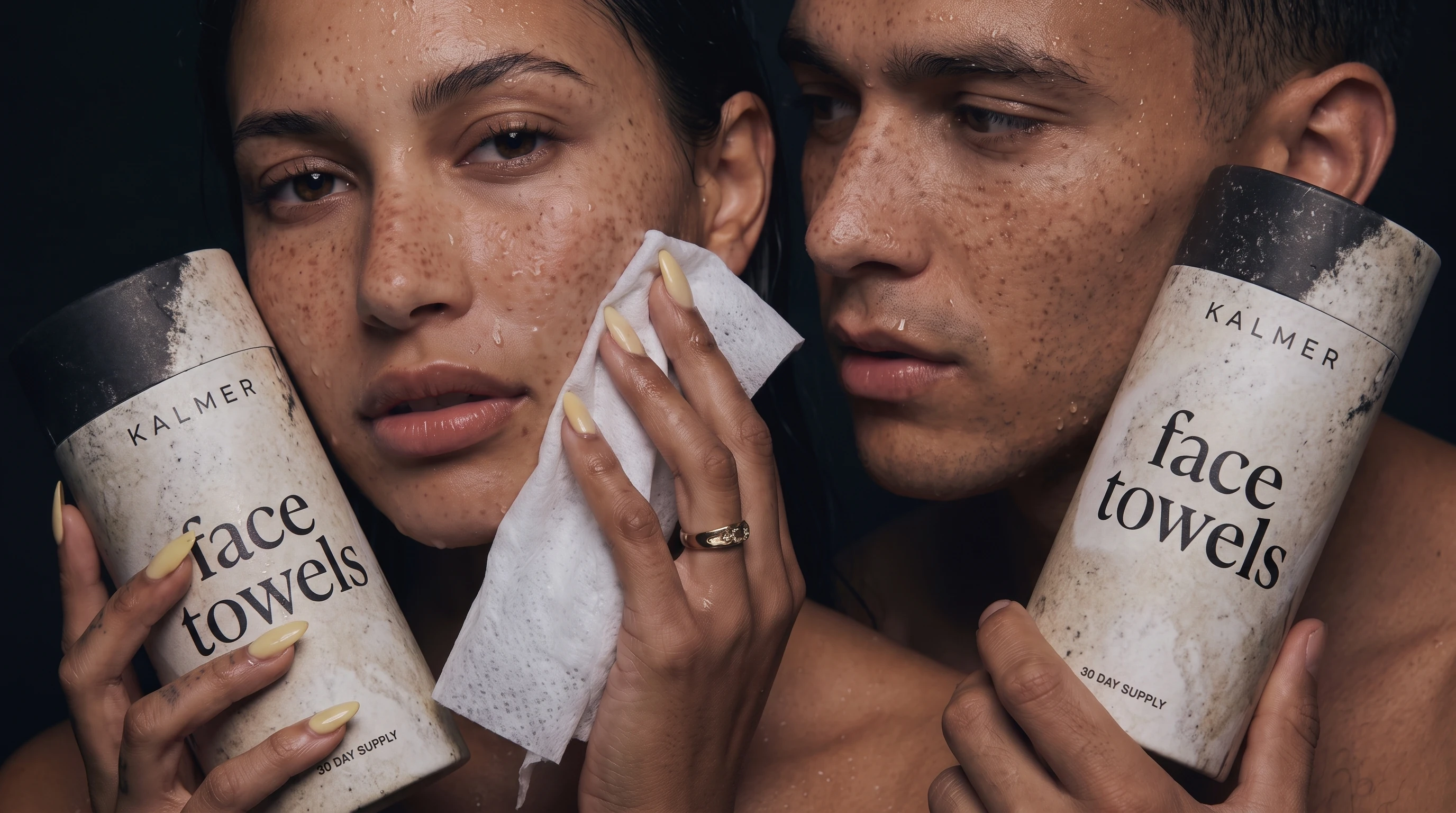
Recovering skin needs zero added friction, and the towel is where friction hides. KALMER is a soft, single-use face towel: gentle to pat with and clean every time, so the drying step is not reopening the irritation you are trying to calm.
Shop KALMERWhat not to do
Do not try to treat over-exfoliation by exfoliating, cleaning harder, or piling on products. These are the three instincts that turn a few-week recovery into a months-long one. Exfoliating to fix the breakouts deepens the barrier damage. Cleansing harder or more often strips the little barrier you have left. And layering serum after serum to soothe the irritation floods stressed skin with more ingredients to react to, when the goal is to reduce inputs.
Also resist the urge to keep testing whether it has healed by using an active "just to see." Every time you reintroduce a stressor early, you reset the clock. Recovery is boring on purpose: the less you do, the faster it works. If your skin is very inflamed, weeping, or not improving after a few weeks of a minimal routine, that is the point to bring in a professional rather than another product. The through-line with a sensitive, reactive skin state is always the same, less is more.
The reason people over-exfoliate is worth understanding, because it prevents the relapse. It is rarely carelessness; it is usually the belief that thorough equals clean and that more equals better, applied to a step where the opposite is true. Once your skin recovers, the way to stay recovered is to hold a much lower exfoliation frequency than felt natural before, guided by our breakdown of how often you should actually exfoliate. The barrier you just rebuilt is the same one you stripped; treat it with the restraint you wish you had the first time.
Why it happens, and how to not repeat it
Over-exfoliation is almost never a one-time accident; it is a habit that built up, usually powered by a good feeling and a wrong belief. The good feeling is that freshly exfoliated smoothness, which is genuinely nice and genuinely addictive. The wrong belief is that if a little makes skin better, more will make it better still. Put those together and you get a slow escalation: a scrub becomes a daily scrub, a weekly acid becomes an everyday acid, and the barrier erodes so gradually that the crash feels like it came out of nowhere. Preventing the repeat means separating the feeling from the frequency. You can enjoy smooth skin without chasing it daily, and the version of you that exfoliates once or twice a week will have better skin all month than the version that exfoliates every day and spends half of each month recovering. The restraint is not deprivation. It is what smooth, calm skin actually requires.
When to see a dermatologist
Most over-exfoliation heals on its own, but some cases need help. See a board-certified dermatologist if your skin is severely inflamed, weeping, or painful, if it is not improving after a few weeks of a gentle, stripped-back routine, if you cannot tell whether you are dealing with over-exfoliation or a condition like rosacea or dermatitis, or if breakouts persist once the barrier has calmed. A dermatologist can confirm what is happening and prescribe treatment that a minimal routine cannot, and can tell you when it is safe to reintroduce actives.
Key takeaways
Over-exfoliation strips the skin barrier faster than it rebuilds, producing redness, tightness, a stripped shine, stinging, flaking, and breakouts, especially after you increased exfoliation. The breakouts trick people into exfoliating more, which deepens the damage. Recovery is subtraction: stop all exfoliation and actives, cut back to a gentle cleanser, a barrier moisturizer, and sunscreen, be physically gentle including at the drying step, and wait a few weeks. Do not exfoliate, scrub, or over-layer to fix it. It is time and restraint that heal an over-exfoliated barrier, never more product.
The encouraging part is that skin is genuinely good at repairing itself once you stop working against it. The barrier rebuilds, the redness fades, the sensitivity settles, and the breakouts that came from the disruption clear, all on their own, given a few weeks of being left alone. You do not have to earn the recovery with effort. You have to allow it by doing less. That is a strange, freeing thing to internalize in a hobby that constantly sells you more steps, and it is the single most useful lesson over-exfoliation teaches: sometimes the best skincare is subtraction.
While your skin recovers, KALMER is a soft, single-use towel: gentle and clean every time, so the drying step adds no friction to skin that is trying to heal.
Frequently asked questions
What are the signs of over-exfoliation?
+
Common signs are redness, a tight or waxy shine, stinging or burning when you apply products, increased sensitivity, dryness and flaking, and unexpected breakouts. Skin may look deceptively smooth or shiny at first because you have stripped the surface, then become irritated and reactive. If these appeared after you increased exfoliation, over-exfoliation is the likely cause.
How long does it take to recover from over-exfoliation?
+
Most skin recovers within a few weeks once you stop exfoliating and simplify your routine, though severe cases can take longer. The barrier rebuilds on its own timeline, so recovery is mainly about removing the stressors and giving it time, not about applying repair products faster.
Should you moisturize over-exfoliated skin?
+
Yes, gently. A simple, fragrance-free moisturizer with barrier-supporting ingredients like ceramides helps the skin hold water while it repairs. Keep the rest of your routine minimal: a gentle cleanser, that moisturizer, and sunscreen, and pause everything else until your skin calms down.
Can over-exfoliation cause acne?
+
It can trigger breakouts, yes. When you damage the barrier, skin becomes inflamed and reactive, and the disruption to oil and cell turnover can lead to breakouts that people mistake for a sign they need to exfoliate more. Exfoliating more deepens the damage, so if breakouts followed heavy exfoliation, easing off is the fix, not scrubbing harder.
Sources
- American Academy of Dermatology, How to safely exfoliate at home
- Del Rosso J, Zeichner J, Alexis A, et al. (2016). Understanding the epidermal barrier in healthy and compromised skin. Journal of Clinical and Aesthetic Dermatology, 9(4 Suppl 1):S2-S8.
- Healthline, How often should you exfoliate your face?
- American Academy of Dermatology, Dermatologists' top tips for relieving dry skin