Does dairy cause acne? What the evidence shows
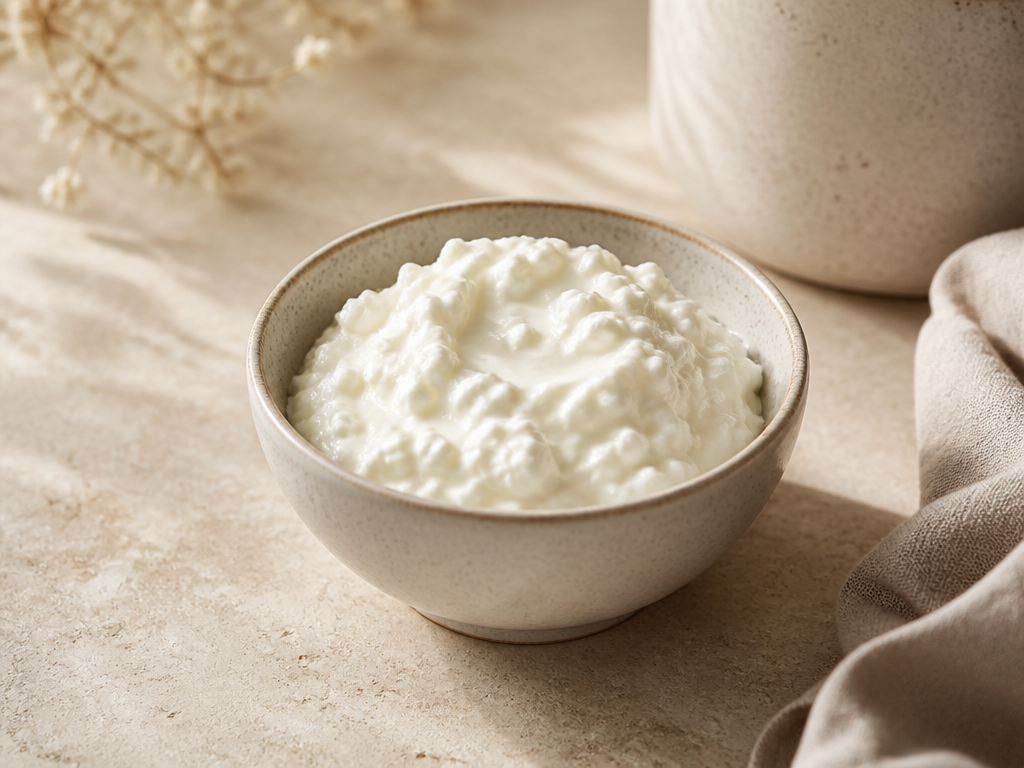
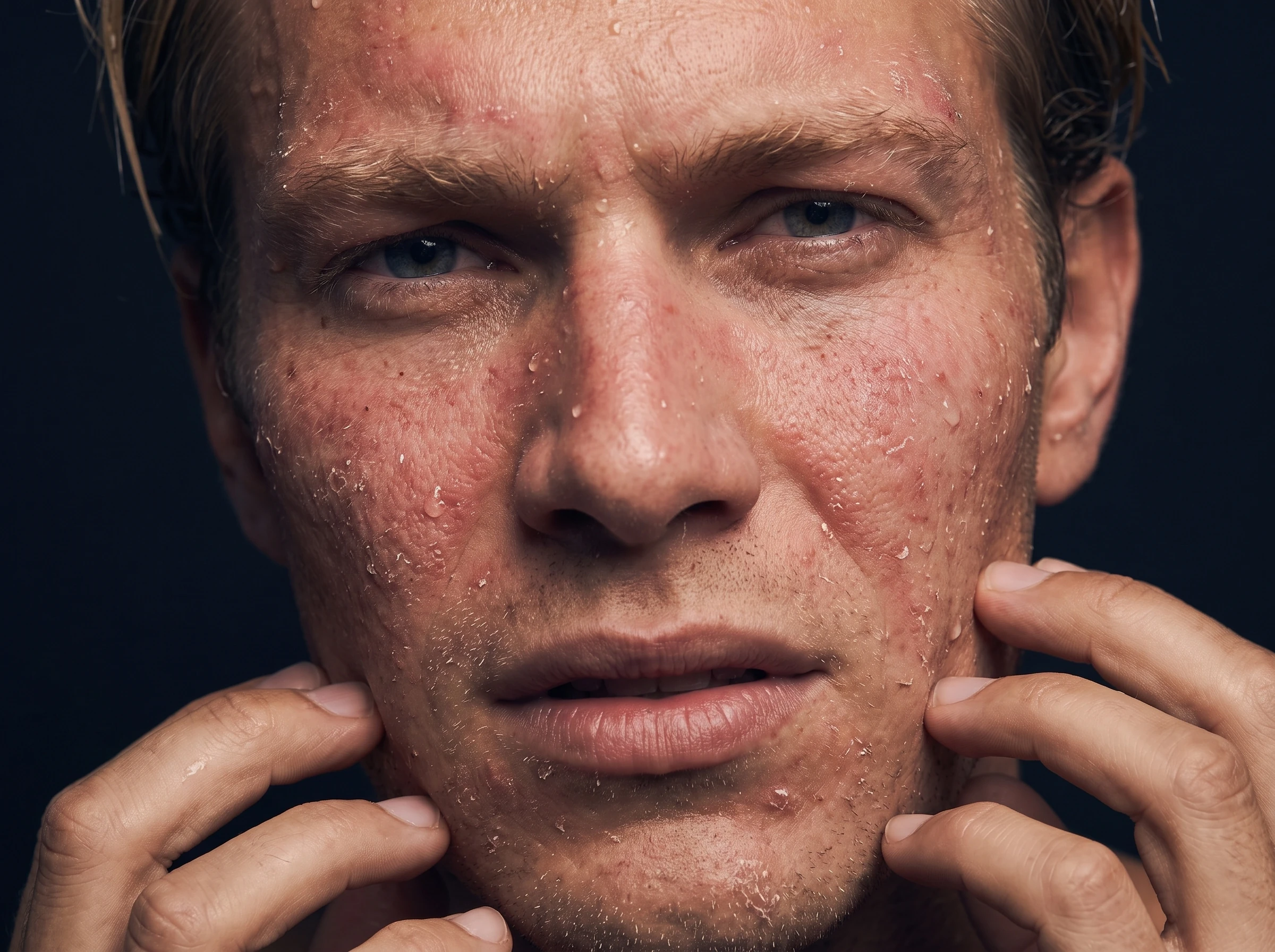
It is one of the most common questions people ask when their skin will not settle: is it the milk? For decades dermatologists waved away any link between diet and acne, but the research has shifted, and the honest answer is now more interesting than a flat yes or no. Does dairy cause acne? The evidence points to a real association, especially with milk, but association is not the same as cause, and the distinction changes what you should actually do about it.
Here is what the studies show, what they do not, why skim milk keeps coming up, and how to test it on your own skin without overhauling your diet on a rumor.
Does dairy cause acne?
Dairy is consistently associated with higher acne rates, but the evidence shows correlation, not proof of cause in everyone. That is the careful, accurate summary, and both halves matter. The association is real and repeated across studies. The causation is not established, and plenty of people consume dairy with clear skin.
The strongest evidence comes from a large pooled analysis: a systematic review and meta-analysis spanning 14 studies and more than 78,000 children, adolescents, and young adults found that any dairy intake was associated with roughly 25 percent higher odds of acne than no dairy intake, with milk showing a somewhat higher figure and low-fat or skim milk highest of all. That is a meaningful, consistent signal from a large sample, which is part of why dermatologists now take the diet-acne link seriously after decades of dismissing it outright. What it is not is proof that a glass of milk will break you out, because an observational meta-analysis shows a pattern across populations, not a guarantee for any one person.
"In a meta-analysis of 78,529 participants across 14 studies, any dairy intake was associated with 25 percent higher odds of acne than no dairy intake, with low-fat and skim milk showing the strongest link among dairy types."Source: Juhl et al., Nutrients, 2018
Not all dairy is equal
Skim and low-fat milk carry the most consistent link across studies, though the picture for other dairy types is less clean than it is sometimes made out to be. This is useful because it points at where to actually look first.
Skim and low-fat milk show a stronger link to acne than whole milk in study after study, including a case-control study in teenagers that found significantly higher skim and low-fat milk intake among those with acne compared to those without. Cheese and butter show a weaker association than milk in the largest pooled analysis, though not a negligible one, and the data on yogurt specifically is genuinely mixed, with at least one large meta-analysis finding yogurt associated with higher odds too, so it is not the free pass it is sometimes made out to be. Whey protein is worth flagging separately: it is milk-derived, so protein powders can affect acne-prone skin the same way milk does, which catches a lot of gym-goers by surprise. So "does dairy cause acne" is mostly a question about milk, and especially skim milk, more than it is a verdict on dairy as a whole category.
| Dairy type | Association with acne |
|---|---|
| Skim / low-fat milk | Strongest and most consistent link |
| Whole milk | Weaker than skim, still present |
| Whey protein powder | Milk-derived, can affect acne-prone skin |
| Cheese | Weaker association than milk, not negligible |
| Butter | Limited data, weak association where studied |
| Yogurt | Mixed evidence; some studies show a link similar to or higher than milk |
Why milk, and why skim?
The leading explanation is hormonal, not the fat or the calories. Milk raises insulin and a hormone called insulin-like growth factor 1, or IGF-1, and both can stimulate the oil glands and speed up skin cell turnover, two things that contribute to clogged pores and acne. The proteins whey and casein appear to drive this hormonal response, which is the thread that ties the findings together.
That mechanism also explains the skim milk puzzle. If fat were the problem, whole milk would be worse, but the opposite is true. The likely reasons: skim milk has a somewhat higher glycemic effect, and processing skim milk changes its protein profile so that, relative to fat, it carries a higher proportion of the whey proteins thought to amplify the insulin and IGF-1 response. In other words, the more processed, lower-fat version of milk is the one that hits the hormonal pathway hardest. Researchers describe this through insulin, IGF-1, and related signaling as a coherent biological framework, though they are careful to call it plausible rather than proven.
Control the variables you can
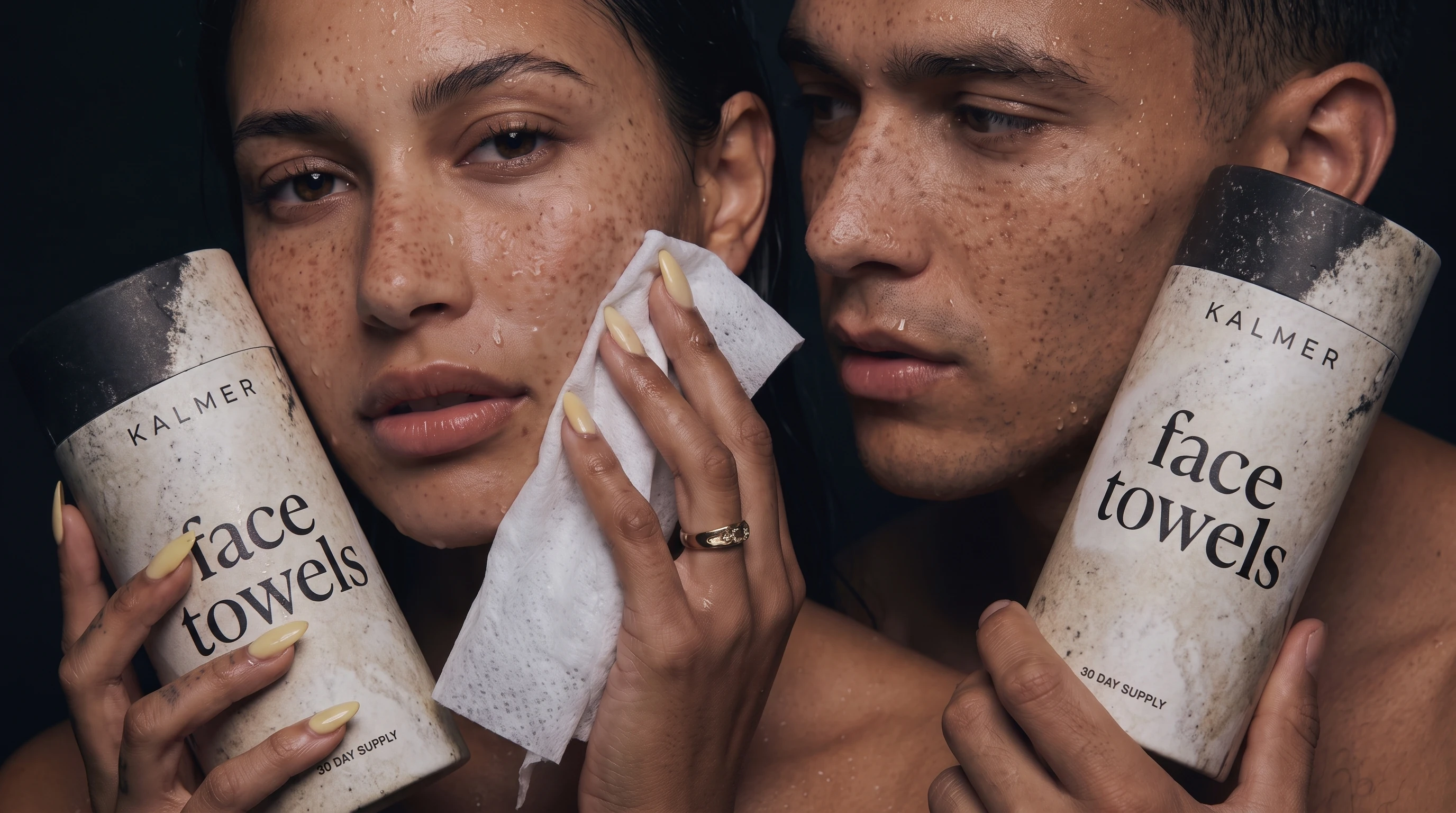
Diet is one acne factor and it is complicated. The controllable, boring ones are worth handling: a clean, low-friction drying surface removes one of them. KALMER is a single-use face towel, clean every time. It will not clear acne, but it takes one variable off the table.
Shop KALMERWhat to actually do about it
If you suspect dairy, reduce milk specifically, give it weeks, and change only one thing at a time. This is the practical translation of "association, not certainty." You do not need to eliminate all dairy on the strength of a population study, and doing so can be needlessly restrictive when the effect, if any, is concentrated mostly in milk.
If you train and use protein powder, that is the first place to look, since whey is milk-derived and behaves like milk for acne-prone skin. A sensible test: cut back on milk, especially skim, and on whey protein if you use it, while keeping the rest of your diet steady. Hold the rest of your routine steady too, so that if your skin improves, milk is the likely reason rather than some other change. Give it several weeks to a couple of months, because skin responds slowly and a week proves nothing. And keep the bar honest: even if dairy is a trigger for you, it is usually one contributor among several, not the master switch. Many people cut dairy, see no change, and learn something useful, that their acne is driven by other factors entirely.
Dairy is one of several dietary threads with an acne signal, and high-glycemic diets, lots of sugar and refined carbs, share the same underlying mechanism: spiking insulin and IGF-1. This is why the advice for both overlaps, and it also means milk is rarely acting alone. This is the same lesson that runs through every honest acne article: single causes are rare, and the useful work is managing the whole system rather than hunting one villain to banish. If you are testing dairy, it is worth noticing your overall sugar and refined-carb intake at the same time, since they push the same hormonal levers. Diet is a system, not a single villain.
Keep the whole picture in view
Acne is multifactorial, so diet is one lever among hormones, genetics, oil production, and daily habits. This matters because it is easy to fixate on one cause and ignore the others. The same person cutting milk should still be doing the boring, controllable basics: a gentle routine, not over-washing, and keeping the everyday things that touch the skin clean and low-friction. None of those cures acne either, but together they remove avoidable variables so that whatever treatment you are on can work.
That is the honest place for a hygiene habit in an acne conversation: a small, controllable variable, never a cure. KALMER is a single-use face towel that keeps the drying step clean and gentle. It does nothing about milk or hormones. It just removes one of the controllable variables while you sort out the ones that matter more.
The honest bottom line on diet and acne
It helps to hold two true things at once: diet can matter, and diet is rarely the whole story. The research has genuinely moved, and dismissing food's role in acne is now as outdated as blaming chocolate for every pimple once was. But the pendulum can swing too far the other way, into elaborate elimination diets that cost a lot of joy for a modest, uncertain payoff. The measured position, and the one most dermatologists actually hold, is that dairy and high-glycemic foods are worth testing if your acne is stubborn, worth adjusting if the test is positive, and not worth agonizing over if it is not. Skin is influenced by diet, hormones, genetics, stress, and habits together, and no single lever controls it. Test the ones you can, keep what helps, and do not let the search for a dietary culprit become its own source of stress, which, ironically, is another thing that does skin no favors.
When to see a dermatologist
Diet experiments have limits, so know when to get help. See a board-certified dermatologist if your acne is persistent, painful, cystic, or scarring, if it has not improved after a few months of consistent care, or if dietary changes make no difference. Acne has effective, evidence-based treatments that work regardless of what is on your plate, and a dermatologist can tell you whether diet is even a meaningful factor for you or a distraction from the treatment that would actually help.
Key takeaways
Does dairy cause acne? The evidence shows a consistent association, especially between milk and higher acne rates, but not proof of cause in everyone. Skim and low-fat milk carry the strongest and most consistent link, likely through insulin and IGF-1 signaling, while the picture for cheese and yogurt specifically is weaker and more mixed than often claimed, and whey protein behaves like milk. If you suspect dairy, reduce milk rather than eliminating all dairy, change one thing at a time, and give it weeks. Above all, keep the whole picture in view: dairy is one contributor among many, and clear skin comes from handling the system, not blaming a single glass of milk.
For the controllable hygiene corner of that system, KALMER is a single-use face towel: clean every time, one less variable, and honest about being exactly that and nothing more.
Frequently asked questions
Does dairy cause acne?
+
The evidence shows a consistent association between dairy, especially milk, and higher acne rates, but not proof of cause in everyone. A large meta-analysis found any dairy intake was associated with about 25 percent higher odds of acne, with skim and low-fat milk showing the strongest link. Not everyone who consumes dairy breaks out, since genetics, hormones, and overall diet all play a role.
Which dairy is worst for acne?
+
Skim and low-fat milk show the strongest and most consistent association with acne in studies, more than whole milk. Cheese and butter tend to show a weaker link, though not none, and the evidence on yogurt specifically is mixed rather than clearly reassuring. Whey protein, being milk-derived, can affect acne-prone skin the same way milk does.
Why would milk affect acne?
+
The leading explanation is hormonal. Milk raises insulin and insulin-like growth factor 1 (IGF-1), which can stimulate oil glands and speed skin cell turnover, both of which contribute to clogged pores. Whey and casein proteins are thought to drive this, which may be why more-processed skim milk shows a stronger effect than whole.
Should I cut out dairy to clear my acne?
+
Not necessarily, and not all at once. If you suspect dairy, try reducing milk specifically rather than eliminating all dairy, give it several weeks to show an effect, and keep the rest of your routine steady so you can tell what changed. Diet is one factor among many, so see a dermatologist if acne persists regardless.
Sources
- Juhl CR, et al. (2018). Dairy Intake and Acne Vulgaris: A Systematic Review and Meta-Analysis of 78,529 Children, Adolescents, and Young Adults. Nutrients, 10(8):1049.
- American Academy of Dermatology, Can the right diet get rid of acne?
- LaRosa CL, et al. (2016). Consumption of dairy in teenagers with and without acne. Journal of the American Academy of Dermatology, 75(2):318-322.
- Melnik BC. Potential role of FoxO1 and mTORC1 in the pathogenesis of Western diet-induced acne.