Fungal Acne vs Bacterial Acne: The Difference
Two people have bumps on their forehead. One has bacterial acne, the other has fungal acne, and if they swap treatments, both get worse. That is the whole reason fungal acne vs bacterial acne is worth understanding: they look similar, they are different organisms, and they need opposite treatments. Guess wrong and you can spend months feeding the exact problem you are trying to clear.
The names do not help. One is called acne and one is nicknamed acne, but only one of them actually is. Here is what separates them, how to tell which you are dealing with, and the single most important trap to avoid.
Fungal acne vs bacterial acne: the core difference
Bacterial acne is caused by bacteria in clogged pores, and fungal acne is caused by yeast in hair follicles. That is the root of every other difference between them. Bacterial acne, clinically acne vulgaris, is the common condition most people mean by "acne." Fungal acne, clinically Malassezia folliculitis, is not truly acne at all, despite the nickname.
Bacterial acne starts when pores clog with oil and dead skin cells, and Cutibacterium acnes, the bacterium once called Propionibacterium acnes, multiplies inside them and drives inflammation, with hormones and genetics setting the stage. Fungal acne starts when Malassezia, a yeast that lives on everyone's skin, overgrows inside hair follicles under warm, damp, oily conditions and triggers an immune response. Both organisms are normal residents of healthy skin. Neither is something you catch. Acne of either kind is a shift in balance rather than an outside invader, which is why both are influenced by the everyday conditions on your skin: oil, heat, moisture, and what you put on top of them. Bacteria versus yeast. That single distinction is why the treatments cannot be swapped, and why the sweat and acne connection points mostly at the fungal side: the warm, damp conditions that follow sweating are what the yeast favors, not the bacteria.
"Malassezia folliculitis is frequently misdiagnosed as acne vulgaris because the two look alike, which delays the antifungal treatment it actually needs."Source: Rubenstein and Malerich, J Clin Aesthet Dermatol, 2014
The last step matters
Calm starts with a clean surface.
Shop face towels
How to tell them apart on sight
Two features separate them: variety and itch. Bacterial acne is varied and usually does not itch. Fungal acne is uniform and often does. If you learn to read those two signals, you can form a strong suspicion before you ever see a dermatologist.
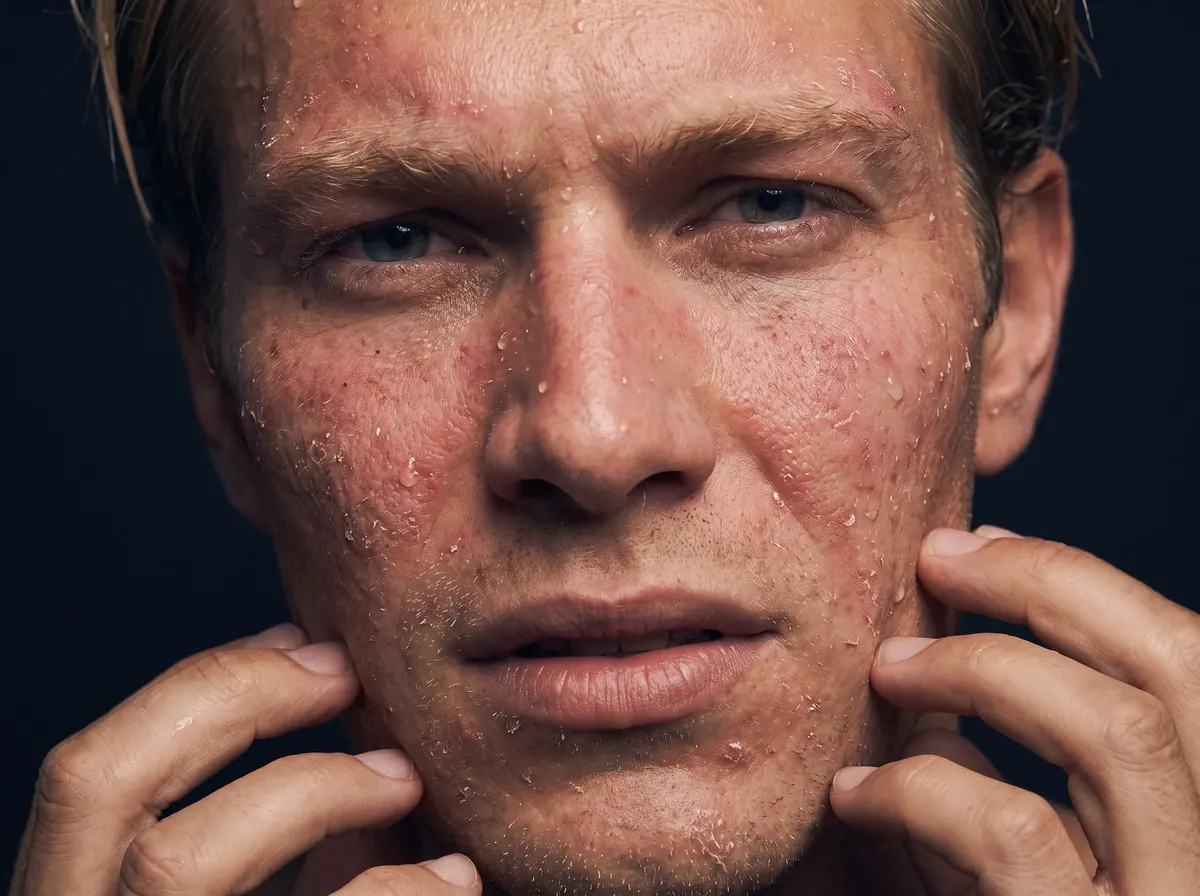
There is a reason the visual difference is so reliable. The two conditions inflame the skin through different pathways, so they produce different shapes. Bacterial acne is messy in a specific way. It produces a mix of lesion types at once: blackheads, whiteheads, red papules, pus-filled pustules, and sometimes deeper cysts, in a range of sizes, concentrated on the face, especially the T-zone and jawline. Fungal acne is the opposite of messy. It produces clusters of small bumps that are strikingly uniform, often the same size and shape, frequently itchy, and located where heat and sweat collect: the forehead and hairline, the chest, the upper back, and the shoulders. If your breakout is a varied mix and painless, lean bacterial. If it is a uniform cluster that itches, especially after sweating, lean fungal.
| Feature | Fungal acne | Bacterial acne |
|---|---|---|
| Cause | Malassezia yeast | Cutibacterium acnes bacteria |
| Is it "true" acne | No | Yes (acne vulgaris) |
| Appearance | Uniform, clustered bumps | Varied: blackheads, whiteheads, cysts |
| Itch | Often itchy | Usually not |
| Common areas | Forehead, chest, back, shoulders | Face, T-zone, jawline |
| Triggers | Sweat, humidity, occlusion, antibiotics | Oil, hormones, clogged pores |
| Treated with | Antifungals | Bacteria-targeting and pore-clearing care |
The antibiotic trap
Here is the most important thing in this article: taking antibiotics for acne can make fungal acne worse. This is the trap that keeps people stuck for months, and it is worth understanding because it is counterintuitive.
The last step matters
Calm starts with a clean surface.
Shop face towelsStandard first-line treatment for stubborn bacterial acne is often an oral antibiotic like doxycycline. Antibiotics kill Cutibacterium acnes, which is exactly what you want if the problem is bacterial. But antibiotics have no effect on yeast. If your breakout is actually fungal, or partly fungal, the antibiotic clears away the bacteria that were competing with Malassezia for space and resources, and with the competition gone, the yeast can overgrow further. The result is acne that gets worse during or after a course of antibiotics, which the person and sometimes the clinician reads as treatment resistance, leading to stronger and longer treatments that still miss the real cause.
So one of the strongest signals that yeast is involved is this: body acne, especially on the chest and upper back, that flared during or after antibiotics. If that is your history, it is worth raising fungal acne specifically with a dermatologist. It reframes the whole problem, and it is the fungal acne story in a nutshell.
One less damp variable
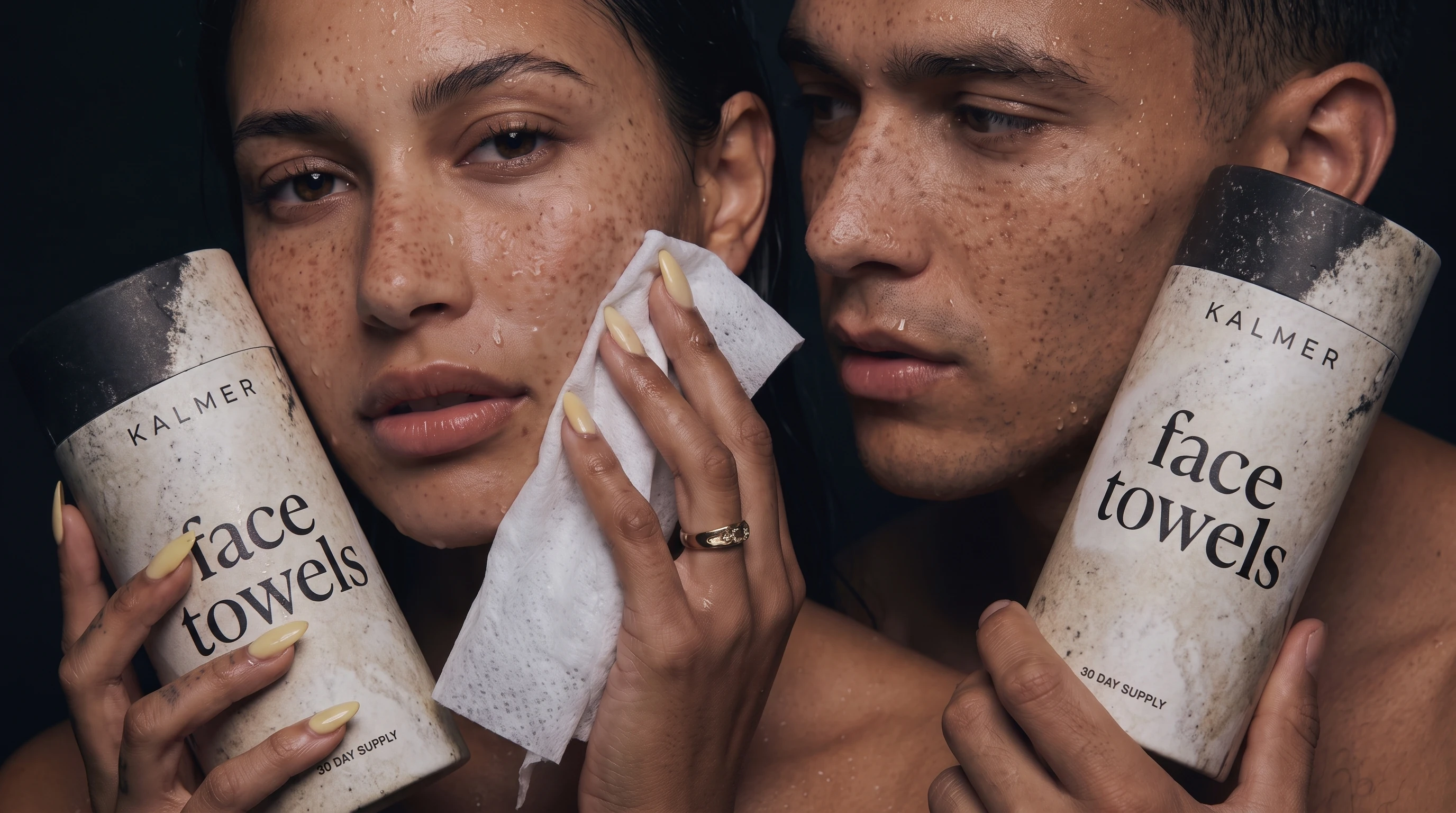
Fungal acne favors warm, damp conditions, so dermatologists point to keeping skin dry. KALMER is a single-use face towel: dry and clean every time, so the towel meeting your skin is never the damp one on the hook. Not a treatment, just one variable off the table.
Shop KALMERThey can also coexist
Fungal and bacterial acne can exist on the same skin at the same time, which is part of why this is so confusing. It is especially common on the body, where the warm, oily conditions on the chest, back, and shoulders support both the bacteria and the yeast at once. Someone with persistent body acne that only partly responds to standard treatment may have both organisms, which is why a single-ingredient approach can produce only partial improvement.
This is also why self-diagnosis has real limits. You can read the signals correctly and still be looking at a mixed picture that needs a professional to sort out. If part of your skin responds to your routine and part stubbornly does not, that split is itself a clue, and a good reason to get a proper diagnosis rather than keep swapping products. The same uncertainty runs through fungal acne vs closed comedones, where the overlap is with clogged pores rather than bacteria.
The last step matters
Calm starts with a clean surface.
Shop face towelsWhat to do about it
Match the treatment to the cause, and when in doubt, get it confirmed. If the picture points bacterial, standard care applies: gentle cleansing, and ingredients like benzoyl peroxide, salicylic acid, or a retinoid that target acne bacteria and clogged pores, with a dermatologist for anything moderate or severe. If it points fungal, the move is different: antifungal treatment, avoiding heavy occlusive products, and keeping skin cool and dry.
Across both, the hygiene basics do no harm and remove avoidable variables. Keeping skin clean, avoiding prolonged contact with damp fabric, and not letting sweat sit on the skin are reasonable regardless of which you have. On the fungal side specifically, the yeast favors warm, damp conditions, so keeping a clean, dry surface against your skin is one small, honest way to avoid feeding those conditions. That is where KALMER fits: a single-use towel that is dry and clean every time, never the damp cloth on the hook. It will not clear either kind of acne, and nothing you dry with will. It just removes one damp variable while the right treatment does the actual work.
One honest note before the clinical part, because it is where people waste the most time. The urge with any stubborn breakout is to escalate: stronger actives, more products, longer treatment. With a mixed or misdiagnosed picture, escalation often makes things worse, because you are intensifying the wrong treatment. Slowing down, simplifying, and getting a diagnosis beats piling on. A calm routine and an appointment will almost always outperform a frustrated one and a fuller shelf.
When to see a dermatologist
See a board-certified dermatologist if you cannot tell which type you have, if your acne has not improved or has worsened despite treatment, if it flared during or after antibiotics, or if you suspect you have both at once. A dermatologist can confirm the cause with a quick test, often a KOH scrape or a culture, and that confirmation is what points you at the treatment that actually works. Because the two need opposite approaches, getting the diagnosis right is the single most valuable step, and it saves the months that guessing wrong would cost.
The last step matters
Calm starts with a clean surface.
Shop face towelsOne more reframe worth carrying away, because it changes how you shop. When you stand in front of a shelf of acne products, almost all of them are built for bacterial acne: benzoyl peroxide, salicylic acid, and the rest assume clogged pores and bacteria. If your problem is fungal, that entire shelf is the wrong aisle, and no amount of trying different products from it will help. Knowing which condition you have does not just pick a treatment, it tells you whether the products marketed at you were ever going to work in the first place.
Fungal acne and bacterial acne look alike but are different organisms needing opposite treatments: bacterial acne is Cutibacterium acnes in clogged pores and responds to bacteria-targeting and pore-clearing care, while fungal acne is Malassezia yeast and needs antifungals. Read them by variety and itch: bacterial is a varied, usually painless mix, fungal is a uniform, often itchy cluster that favors sweat-prone areas. Watch for the antibiotic trap, where acne worsens during or after antibiotics, a strong sign yeast is involved. They can coexist, which muddies the picture further, so when you are unsure, a dermatologist and a quick test settle it.
Frequently asked questions
How do I know if my acne is fungal or bacterial?
+
Look at variety and itch. Bacterial acne is mixed, with blackheads, whiteheads, papules, and sometimes cysts, and usually does not itch. Fungal acne is made of uniform bumps that are all a similar size, often itchy, and clustered on the forehead, chest, and back. A dermatologist can confirm with a simple test.
Can you have both fungal and bacterial acne at once?
+
Yes, and it is common, especially on the body. The warm, oily conditions on the chest, back, and shoulders can support both Cutibacterium acnes bacteria and Malassezia yeast at the same time, which is one reason single-ingredient treatments sometimes only partly work.
Why did my acne get worse after antibiotics?
+
That is a classic sign of a fungal component. Antibiotics clear the bacteria but have no effect on yeast, and by removing the bacteria that competed with Malassezia, they can let the yeast overgrow. Body acne that worsens during or after a course of antibiotics is a strong clue to ask a dermatologist about fungal acne.
What treats fungal acne vs bacterial acne?
+
Bacterial acne responds to ingredients like benzoyl peroxide, salicylic acid, retinoids, and sometimes antibiotics. Fungal acne needs antifungals, such as ketoconazole or zinc pyrithione, or oral antifungals from a doctor. Using the wrong one wastes time and can make the other condition worse.